
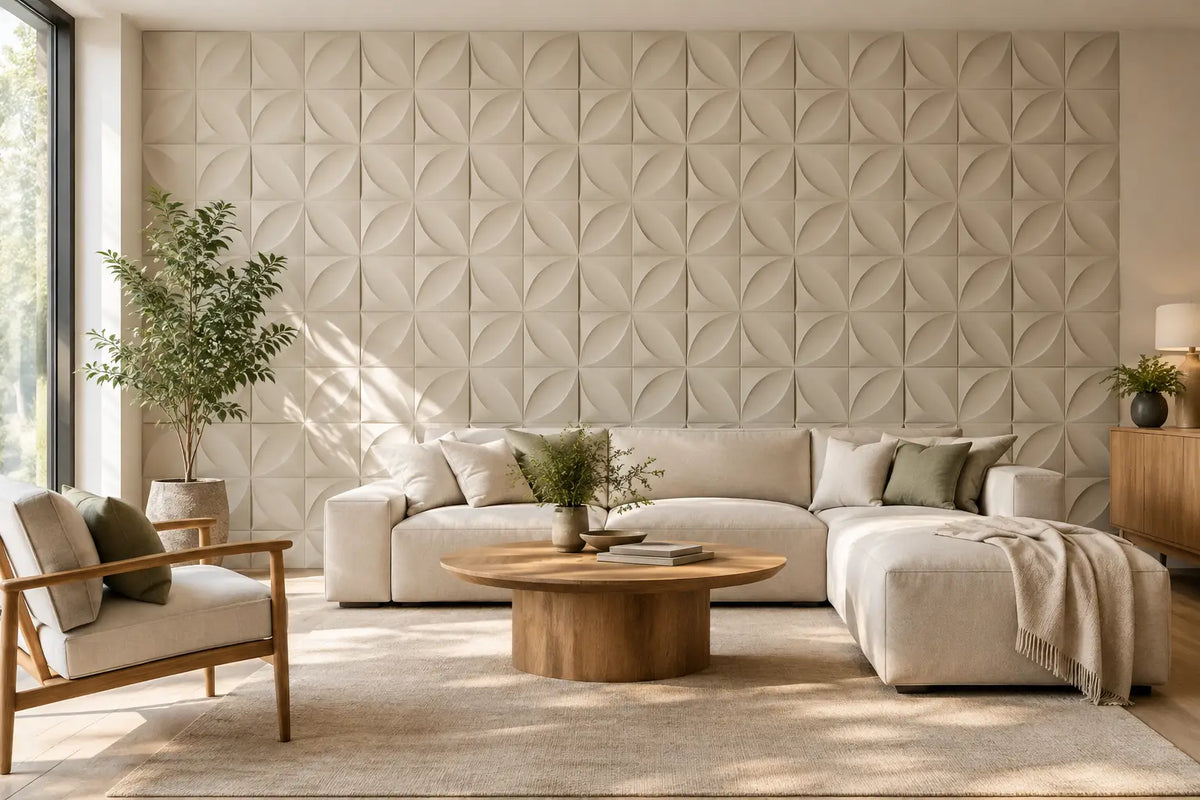
A wall repainted every two years, a floor replaced at the first scratch, materials chosen solely for their immediate effect: this is often where an interior's footprint is determined. Low-carbon interior trends invite us to take a different view. They do not ask us to give up beauty, but to favour choices that can last, evolve and genuinely improve everyday comfort.
Whether renovating or planning an interior, low carbon is not a fixed aesthetic. It is a way of selecting: less waste, thoughtfully used materials, a longer lifespan and decoration that does not quickly become outdated. The result can be minimalist, warm, sculptural or thoroughly contemporary. What matters is designing an interior whose value extends beyond a season.
Low-carbon interior trends are shifting priorities
The first step is to look beyond colour or finish. An interior with a carefully managed impact considers a material's origin, the energy needed to manufacture it, transport, installation, maintenance and its ability to remain in place for a long time. There is therefore no universally perfect material. A fragile local option that needs frequent replacement may lose some of its appeal compared with a longer-lasting solution that is carefully chosen and correctly installed.
This approach puts lasting aesthetic appeal at the heart of the project. Deep neutral shades, architectural forms and mineral textures retain their strength as fashions change. They also avoid the costly cycle of purely decorative makeovers. An elegant interior does not need constant renovation: it should provide a well-judged foundation that furniture, lighting and accessories can help evolve.
The second priority is comfort. Reducing heating needs, improving a room's acoustics or choosing a low-maintenance finish contributes to a more coherent approach to decoration. A pleasant living room, a more restful bedroom or a less reverberant workspace gains in usability, not just appearance.
Embrace reuse without creating a static interior
Reuse is rightly becoming established in contemporary projects. Reclaimed timber, restored lights, second-hand furniture, retained handles or salvaged stone reduce demand for new production while adding a patina that cannot be imitated. They also give a space a more personal depth than interiors made up entirely of new pieces.
The right balance is to integrate them into a carefully composed design. An old table can sit alongside clean-lined seating. A restored sideboard takes on a different presence against a textured wall painted in a soft, enveloping matt shade. Reuse does not mean accumulating objects or recreating a nostalgic setting. It becomes particularly convincing when framed by calm, lasting interior architecture.
For larger projects, an assessment before demolition is crucial. Keeping a door, parquet flooring, characterful radiators or hardware can prevent unnecessary purchases. This sometimes requires restoration work and more detailed planning. That is the trade-off with reuse: it calls for more foresight, but often creates a more distinctive result.
Wall relief as an alternative to disposable finishes
Wall coverings have long been chosen as an easily replaceable layer. Current trends instead favour surfaces that bring character through the decorative structure itself: mineral plasters, carefully sourced wood, durable wall textiles and relief panels. Relief catches the light, creates shifting shadows and adds an architectural presence without multiplying objects.
3D gypsum wall panels meet this desire for depth. Their surface can be painted, allowing a new atmosphere without removing the entire covering. A mineral shade, a luminous off-white or a deep brown can transform the perception of a geometric or wavy pattern. This adaptability is valuable in an interior designed to stay in place: the colour is refreshed rather than the material replaced.
Gypsum nevertheless deserves a nuanced assessment. Like any building material, its footprint depends on manufacturing, components, transport distances and the installation system. When comparing solutions, it makes sense to request precise information about composition, durability and, where available, an environmental declaration. A decorative panel's value is also measured by its longevity, its repaintability and its ability to avoid repeated renovation.
In a bedroom, a wave panel behind a headboard softens the space and can contribute to a more restful atmosphere. In a living room, a geometric pattern structures a media wall or alcove without making the space feel heavy. In hotel, residential or commercial projects, panels with integrated LED lighting combine light and decoration in a single installation. At EFFET MARBELLA, this sculptural dimension goes hand in hand with use designed for residential renovations and more ambitious decorative projects alike.
Reduce the footprint through lasting choices
Low-carbon decoration is often decided before a purchase is made. Measuring surfaces accurately, ordering the right quantity and properly preparing the substrate limit offcuts, returns and rework. An accent wall does not always require covering an entire room: a targeted area can have a stronger visual impact using less material.
Modularity also helps. Choosing elements that can be repaired, dismantled or easily repainted makes the space more flexible. A durable wall finish can accompany several lives of the same place: a child's bedroom becoming an office, a rearranged living room, an apartment intended for rental. The most interesting materials are often those that accommodate change without requiring complete removal.
Installation matters as much as the product. A dry, flat and clean substrate supports a lasting installation and reduces the risk of detachment or cracks. Choosing the adhesive, making precise cuts and respecting drying times avoid costly corrections. For a large surface, an uneven wall or electrical integration, professional installation may be preferable. Doing it yourself makes sense when the layout is straightforward and installation recommendations are followed carefully.
The low-carbon palette is richer than it seems
Low-carbon design is sometimes imagined only in beige, raw finishes and austere simplicity. Yet the most enduring palettes are also those that create lasting emotion. Warm whites, clay greys, muted greens, mineral blues, smoky terracottas and cocoa browns create sophisticated settings without relying on a fleeting fashion effect.
Light plays a major role in this palette. A relief wall painted the same colour as the rest of the room reveals subtle nuances throughout the day. Grazing light emphasises the shapes, while softer lighting calms them. This visual richness reduces the need for superfluous decoration: the wall itself becomes an element of the composition.
Combining materials calls for restraint. A strong texture benefits from being surrounded by quieter surfaces, such as washed linen, matt wood or patinated metal. In a small space, a broad pattern and a light colour can make the volume appear larger. In a spacious room, a dense shade and a more graphic relief create an anchor point. The right choice always depends on the light, the room's use and the proportion of wall being treated.
Think of the interior as an investment in use
Low carbon is not simply about buying more cheaply or choosing a reassuring label. It means investing in decisions that prevent premature replacement: timeless decoration, an adaptable material, careful installation and comfort felt every day. This logic is particularly relevant to owners, renovators and professionals who want to create desirable places without resorting to disposable decoration.
Before finalising your project, ask yourself a simple question: will this surface still make sense in five or ten years? If it can be maintained, repainted, repaired or incorporated into a new atmosphere, it already has a good chance of becoming a more considered choice. The most elegant interiors often emerge from this quiet permanence.


