
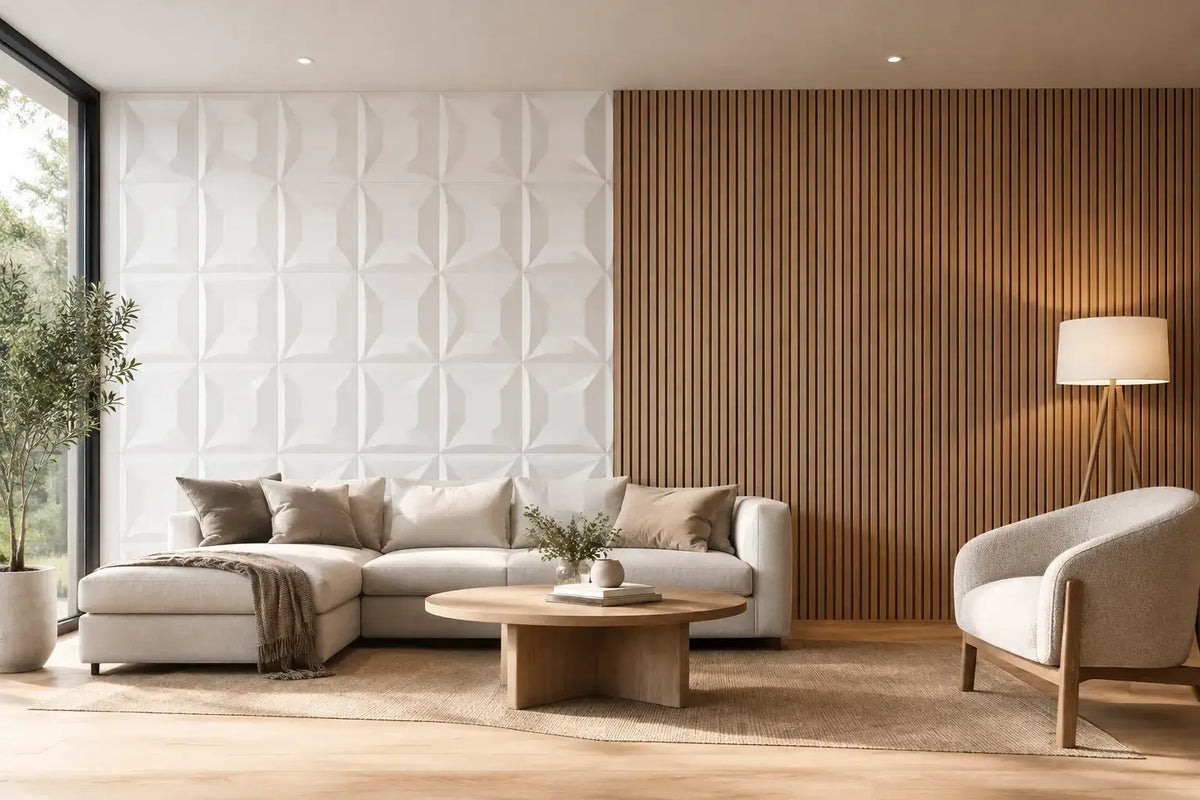
An empty wall can make a room look unfinished, even when the furniture has been chosen with care. When choosing between gypsum panels or wooden slats, the decision goes beyond a decorative trend: it defines the depth, light, comfort and character of your interior. One creates a sculptural, seamless and customisable surface. The other introduces the warm rhythm of a vertical line and the natural presence of wood.
To make the right choice, you need to look beyond first impressions. How the room is used, its exposure to light, the level of maintenance you want, your acoustic goals and the overall style: these criteria help create a setting that stays elegant long after trends have passed.
Gypsum panels or wooden slats: two ways to shape a wall
Wooden slats create an instantly recognisable graphic pattern. Their vertical lines can make a low room feel taller, define a television area or frame a reading corner. They work particularly well in Scandinavian, Japandi, contemporary or organic-inspired interiors. Their strength lies in their visual warmth: the grain, variations in tone and shadows between each slat bring the wall to life.
Gypsum wall panels offer a more architectural approach. Waves, facets, geometric patterns or organic reliefs give the wall volume. Where slats establish a regular rhythm, gypsum lets you create a decorative composition with greater depth and movement. Grazing light, indirect lighting or integrated LEDs then reveal every detail of the relief.
The choice therefore depends on the effect you want. For an enveloping, textured and natural atmosphere, wood is an appealing option. To create a more sculptural, contemporary and tailored focal point, gypsum panels offer greater freedom of form. They can also be painted in the exact shade of the project, from mineral white to the deepest tones.
The visual effect: the warmth of wood or the depth of relief
Slats draw the eye through repetition. This regularity brings order to a large wall and can balance an elaborate decor. However, covering an entire surface, or using many slats in a small room with little light, can also darken the overall effect. The choice of wood species, finish and backing behind the slats then becomes crucial.
Gypsum interacts with light differently. A wavy pattern can soften the lines of a very rectilinear living room, while a geometric design brings a stronger presence to an entrance, a headboard or a dining room. The relief remains visible even in a monochrome finish: it is precisely this restraint that gives it lasting elegance.
A white gypsum panel can retain a bright, understated appearance during the day, then become striking in the evening under side lighting. Alternatively, tone-on-tone paint allows the wall to connect with the joinery, textiles or furniture. This adaptability is valuable when you want to update your decor without replacing the wall covering.
Material, comfort and everyday maintenance
Wood has an obvious emotional appeal. It brings the feeling of an authentic material and a warm touch, especially in living rooms and bedrooms. However, it requires care suited to its finish. Dust can settle between the slats, and changes in light can alter its colour over time. In damp rooms, the choice of backing and treatment must be particularly careful.
Decorative gypsum panels are designed for dry indoor spaces. Their mineral surface has a refined presence and is suitable for painting. Once correctly installed and protected with an appropriate finish, they are easy to maintain with gentle dusting. Their real appeal lies in their visual continuity: the joints are finished to create a coherent design rather than a collection of separate elements.
In terms of comfort, both solutions can contribute to a more subdued atmosphere. Slats, especially when combined with acoustic felt, can help reduce some reverberation. Gypsum panels, meanwhile, add mass and relief to an existing wall. Actual acoustic performance always depends on the complete system: the wall substrate, any air gap, insulation behind the facing, furniture and the volume of the room.
Installation: which solution suits your project?
Slats are often seen as the quickest solution, particularly when supplied on felt backing. However, their installation requires great precision from the outset. A first panel that is slightly crooked will be noticeable along the entire wall. Cuts around sockets, corners and doors must also be clean to preserve the high-end effect.
Gypsum panels require careful preparation of the substrate, aligned installation and neatly finished joints. A methodical DIY enthusiast can install them on a simple project, but professional help remains worthwhile for a large surface, a complex pattern, integrated lighting or a flawless finish. The result rewards this care: the wall takes on the appearance of a bespoke architectural feature.
Before ordering, measure the surface precisely and plan the cuts. Also check the flatness of the wall, the position of sockets, electrical feeds and the direction of natural light. A successful composition rarely starts with the wall covering itself: it starts with a well-prepared wall and lighting considered from the beginning.
How do you choose between gypsum panels and wooden slats?
If your priority is to introduce a natural, linear touch into a soft interior scheme, wooden slats are a coherent choice. They are particularly effective in a study, an entrance hall or on a wall behind a sofa. Their aesthetic works very well when echoed sparingly in other details, such as a coffee table, a shelf or a light fitting with wood finishes.
If you are looking for a more distinctive decor, gypsum panels create a more immediate visual impact. They are suitable for an accent wall in a living room, an elegant headboard, a hallway you want to transform or a professional reception area. Collections of geometric reliefs, waves or panels compatible with lighting offer different levels of expression, from understated texture to an unmistakable centrepiece.
Here are the situations in which each solution is the most natural fit:
- Choose slats to reinforce a warm, wood-inspired atmosphere with a rhythm of vertical lines.
- Choose gypsum for a sculpted wall, painted in your chosen colour and enhanced by light.
- Opt for wood if you want a very regular, graphic visual effect.
- Choose gypsum if you want to make the wall a true decorative feature, almost a work of art.
Creating a wall that stands the test of time
The best decision is one that serves your room's architecture, rather than reproducing an image seen everywhere. A low ceiling will benefit from the verticality of slats. A large wall bathed in side light will beautifully reveal a relief panel. Curves can soften a bedroom, while a reception space can accommodate a more structured pattern.
At Effet Marbella, 3D gypsum panels are designed to give interiors this lasting depth, without sacrificing the freedom to personalise the finish. Take time to observe your wall at different times of day, then choose the material that will make the room more expressive, more comfortable and truly your own.


