
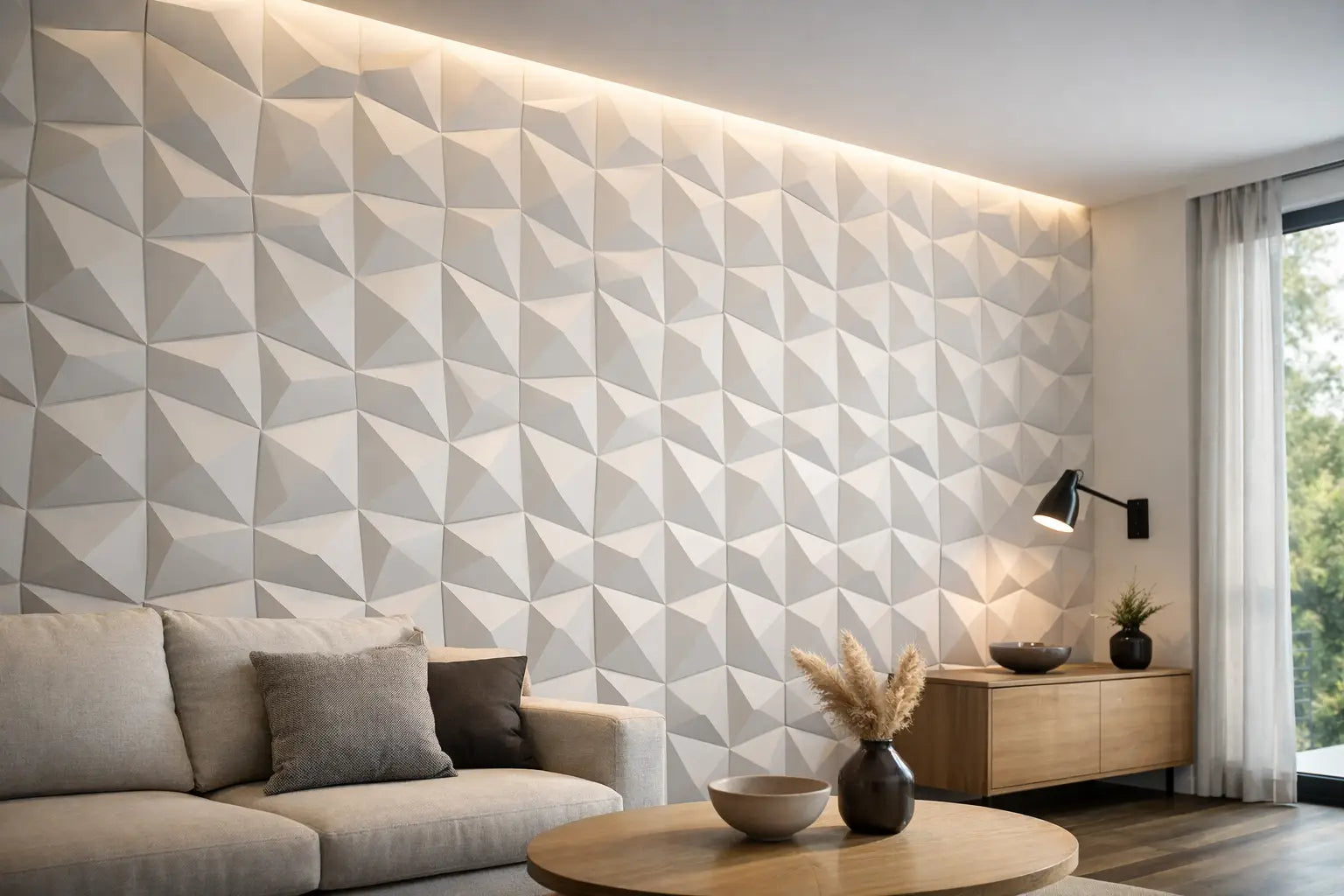
A textured wall can change the balance of a room. When lighting is considered from the design stage, however, it becomes a true architectural feature. This guide to integrated decorative wall lighting helps you create a refined atmosphere, highlight the relief and make the right technical choices before installation.
Integrated lighting involves more than adding a strip of light to a wall. It reveals the forms, shapes perspectives and provides depth that general ceiling lighting cannot always achieve. Combined with 3D gypsum wall panels, it creates a contemporary, elegant and lasting design, suited equally to a bedroom, living room, entrance hall or high-end hotel or residential project.
Why integrate lighting into a decorative wall?
Decorative wall lighting transforms the perception of a space. Shadows falling across the relief define the pattern, accentuate curves and change the wall's appearance throughout the day. With the lights off, the panel has a sculptural presence. When illuminated, it becomes a distinctive visual feature.
This solution is particularly appealing in interiors where you want to avoid adding numerous visible light fittings. A conventional wall light illuminates a specific point, whereas an integrated lighting profile can extend across an entire wall composition. The result feels more carefully designed, calmer and often more luxurious.
The effect depends on the room, however. In a narrow corridor, grazing light can visually lengthen the wall without obstructing the passage. In a living room, it creates a backdrop behind a sofa or television. In a bedroom, it can be an attractive alternative to some bedside lamps, provided the brightness is adjustable and the light remains soft.
Choosing the right lighting effect
Before selecting a panel or LED strip, define the role of the light. Do you want to highlight relief, guide the eye, create an atmosphere or supplement the main lighting? The same wall can serve several purposes, but a clear intention helps avoid an overly busy result.
Grazing light to reveal the relief
Grazing lighting is positioned close to the wall so that the beam skims across its forms. It is the most dramatic option for geometric panels, waves or faceted designs. Every recess and edge becomes visible, giving the gypsum remarkable depth.
It does require careful installation. A light source that is too close or too powerful can create harsh shadows and reveal unevenness in the underlying surface. On a large wall, plan for quality profiles and even diffusion to avoid visible points of light.
A line of light to define a composition
An LED line integrated into a wall pattern creates a graphic, almost architectural effect. A vertical line adds a sense of height. A horizontal one makes the room appear wider. Used to frame a niche, mirror or central panel, it establishes a precise rhythm without overwhelming the decor.
This approach works particularly well in a contemporary interior with clean lines. It does call for restraint, though. A single well-positioned line often has more impact than several competing light patterns.
Backlighting for a softer atmosphere
Backlighting places the light behind a shape, panel or frame to create a halo on the wall. The effect is gentler than grazing light and suits relaxation areas, headboards and reception spaces.
A small gap is needed between the decorative element and the supporting wall so the light can spread. This technique creates an enveloping atmosphere, but reveals the fine details of a 3D panel less clearly. It is therefore ideal when visual comfort matters more than showing the relief at its most pronounced.
Choosing the right colour temperature
The colour of the light influences the atmosphere as much as the panel design. For an elegant residential interior, a temperature between 2700 K and 3000 K is generally the most harmonious choice. Warm white softens the gypsum, complements sand, beige, terracotta and warm grey tones, and creates a welcoming feeling.
A neutral white around 4000 K can work in certain professional spaces, a contemporary bathroom or a hall with mineral finishes. It defines lines more sharply, but can feel cooler in a living room or bedroom.
Consistency is essential. If the room's pendant lights, spotlights and wall lights emit warm light, a very white LED wall may upset the balance. Integrated lighting should complement the existing atmosphere rather than conflict with it.
Designing the wall before installation
A successful project takes shape before the panels are fixed. Plan the cable route, power supply position, LED profile dimensions and future access to the components. Integrated lighting should be discreet, but its installation should never be improvised.
Start by looking at the wall from the main viewing positions. What pattern will be visible from the sofa, dining table or entrance? Which height will look best? A vertical strip can be elegant behind an armchair, but serves little purpose if it disappears behind a tall piece of furniture. Similarly, a horizontal line fitted too low may be hidden by a sofa.
Sockets, switches and conduits also need to be considered. During a renovation, an electrician can provide a dedicated power supply and conceal the wiring behind the panels. For a simpler project, it may be possible to integrate the lighting near an existing electrical point, provided a clean finish is maintained.
Planning the LED profile and diffuser
An LED strip on its own is rarely the best solution for a premium wall. An aluminium profile keeps the line straighter, improves heat dissipation and protects the installation. Paired with an opal diffuser, it reduces the visibility of individual diodes and creates a continuous line of light.
The diffuser choice depends on the desired effect. A very opaque diffuser softens the light but slightly reduces its intensity. A more transparent diffuser gives a brighter result, with a greater chance of visible LED points if the strip has a low diode density. For a high-end finish, choose a high-density LED strip and a profile suited to the thickness of the decorative surface.
Planning for cleaning and maintenance
Even a durable installation must remain serviceable. The power supply and connections should remain accessible through a discreet access hatch, a piece of furniture or a removable section. Permanently sealing a transformer behind a finished wall can make future maintenance unnecessarily difficult.
Gypsum panels can be repainted as your decor evolves. If you repaint the wall, carefully protect the diffuser and lighting components. A matt finish often shows the relief to better advantage than gloss paint, which can create stronger reflections under LEDs.
Combining 3D panels with integrated lighting
Not every pattern responds to light in the same way. Waves create soft, shifting shadows, ideal for a bedroom or relaxation area. Geometric patterns create a more graphic, structured effect, particularly suited to an entrance hall, contemporary living room or professional space.
Panels with integrated LEDs take this further by bringing relief and lighting together in the same composition. This approach makes it easier to create a consistent appearance: the panel design already provides a place for the light, and the whole arrangement feels conceived as a single decorative element. At EFFET MARBELLA, these solutions offer an elegant way to give a wall character while retaining the benefits of a gypsum covering, including its customisable surface and acoustic comfort.
To keep the decor elegant, avoid mixing too many patterns. An illuminated feature wall works best when it remains the room's focal point. The other walls can stay more restrained, in a complementary shade or with a subtle texture.
Mistakes that weaken the result
The first mistake is choosing light that is too cool or too intense. A decorative wall does not need to be lit like a shop display. It should be revealed with care. A dimmer is therefore a particularly useful investment: it lets you adjust the atmosphere for dinner, a relaxing evening or reading.
The second mistake is neglecting alignment. A few millimetres of misalignment in a line of light can become very noticeable on a geometric wall. Marking out, levelling and cutting deserve professional attention, especially on large installations.
Finally, avoid treating lighting as a late addition. Integrated lighting looks better when considered alongside the pattern, paint, furniture and use of the room. A coherent project does not try to impress at any cost: it gives the wall the calm, sculptural presence that makes an interior memorable.
A precisely lit wall provides far more than an extra light source. It creates an atmosphere, highlights materials and makes coming home feel more elegant.


