
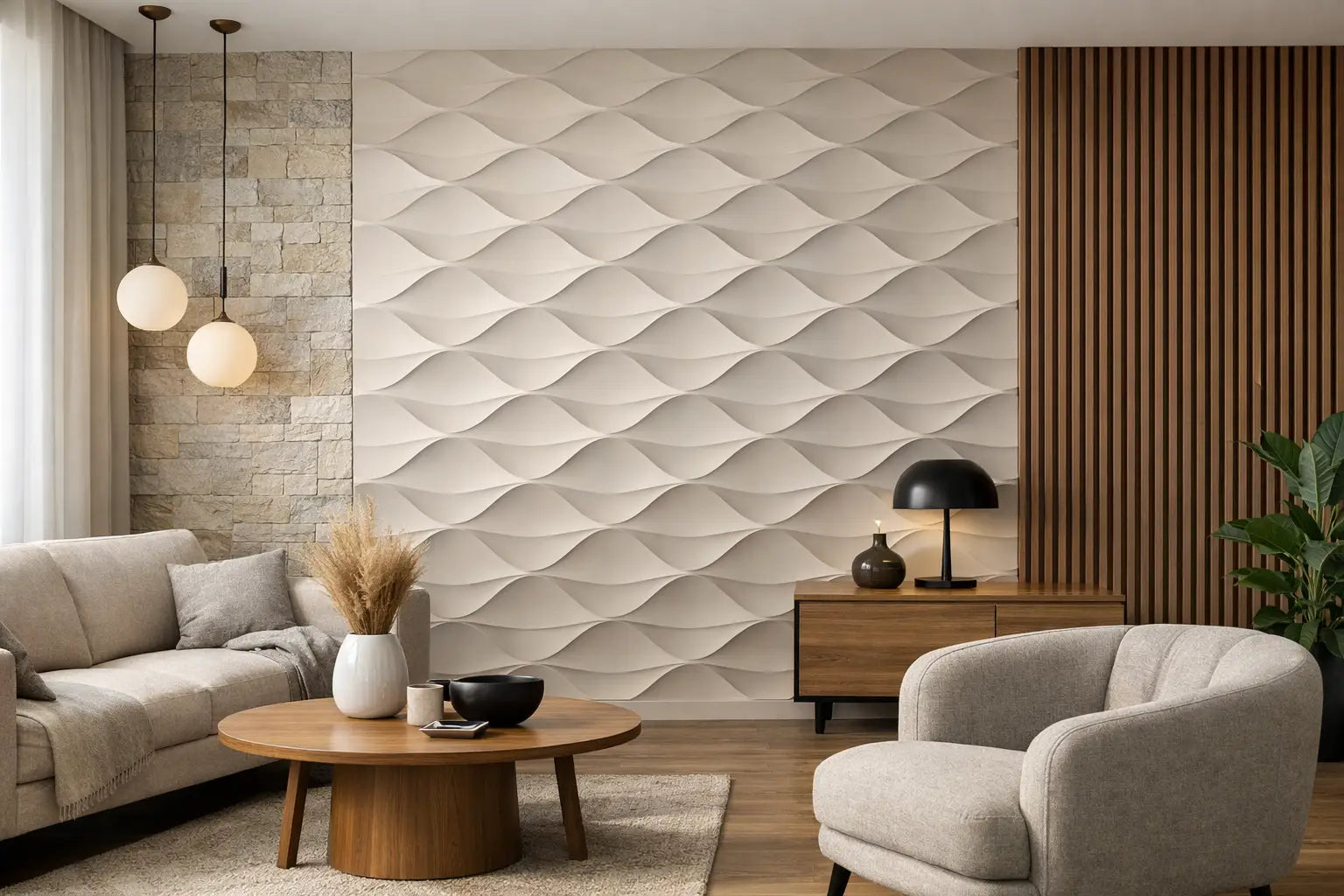
A perfectly furnished living room can still feel unfinished if its walls remain smooth, empty and lacking in character. Living room wall coverings transform this often overlooked surface into a true element of interior architecture. The right choice is about more than colour or pattern: it should work with the light, proportions, desired comfort and everyday use of the room.
In a space for welcoming guests, every detail matters. A relief covering can highlight a sofa, give a TV wall a more refined presence or define a dining area opening onto the living room. The key is to choose the right material, design and proportions.
Choosing a covering to suit the wall's role
Before selecting a texture, look at the wall you want to cover. A wall behind the sofa is a natural focal point: it can accommodate pronounced relief, graphic lines or a dramatic composition. By contrast, a wall already occupied by a bookcase, artwork or large openings often benefits from a more subtle finish.
The TV wall deserves particular attention. Cables, the screen and low furniture already form a visual composition. A textured wall covering adds depth without requiring numerous decorative objects. Regular geometric patterns create a contemporary setting, while waves or curved lines soften a room dominated by straight-edged furniture.
In a small living room, the goal is not necessarily to add more. A single carefully chosen decorative wall may be enough to create a sense of space. In a large room, the covering can also define zones: separating the seating area from the dining area, dressing a fireplace or making the most of a generous ceiling height.
3D panels: relief that changes the atmosphere
Among living room wall coverings, 3D gypsum wall panels stand out for their ability to create a sculptural presence. Where paint adds colour, relief catches the light throughout the day. Shadows shift, lines gain definition and the wall develops a tangible material presence.
This solution is particularly suited to contemporary, minimalist or European design-inspired interiors. Gypsum panels provide an elegant surface designed to be painted to suit the room's colour scheme. Matt white creates a bright, architectural atmosphere; mineral beige adds softness; deep green or charcoal grey produces a more enveloping effect. Colour radically changes how the pattern is perceived.
Geometric patterns, waves or integrated lighting
A geometric pattern suits living rooms with a structured layout, clean lines and modern furnishings. It creates a precise visual rhythm, particularly effective behind a simply shaped sofa or opposite contemporary low furniture.
Wave panels introduce greater fluidity. They often work well in interiors seeking a calming atmosphere, with rich textiles, light wood or natural tones. Their flowing design avoids the rigid effect of a strongly graphic wall treatment.
Models designed to incorporate LED lighting add a more theatrical dimension. They can illuminate a wall indirectly, highlight the relief and create a subdued evening atmosphere. This option does require more careful preparation: power supply positions, colour temperature and maintenance access should be planned before installation.
Comfort as well as style
Gypsum is valued for its mineral finish and stability. On an interior wall, 3D panels can also help improve the room's perceived thermal and acoustic comfort. Their relief slightly breaks up sound reflections, which may make a living room less reverberant, especially when it contains many smooth surfaces.
It is important to keep expectations realistic. A decorative covering does not replace complete sound insulation or the treatment of a wall exposed to significant noise. Its effect depends on the area covered, the composition of the existing wall, the fixing method and the living room's furnishings. Combined with curtains, a rug and upholstered seating, it contributes to a more comfortable atmosphere.
Comparing the main wall coverings
Paint remains the simplest way to refresh a living room. It makes changing the atmosphere easy and suits controlled budgets. However, it does not create real texture. Even a deep shade or premium matt finish cannot replace the richness of carefully designed relief.
Wallpaper offers a wide choice of patterns, panoramic designs and material effects. It can be highly decorative, particularly in classic, vintage or maximalist interiors. Its main strength is variety. The points to watch are precise installation, pattern alignment and long-term durability in areas with frequent traffic.
Wood immediately adds warmth. Boards, slats and cladding work well in a living room with a natural or contemporary feel. In return, wood requires thought about maintenance, how it combines with other wood species already present, and the visual effect it creates. In a room already rich in parquet, beams or oak furniture, it can become dominant.
Natural stone and mineral cladding create an authentic, high-end effect. They are particularly suited to large rooms, fireplaces and homes with character. Their weight, thickness and installation requirements are more demanding, however. For an apartment or a light renovation, gypsum relief is often a more accessible alternative that is easier to incorporate.
3D wall panels offer an appealing balance of visual impact, a customisable surface and manageable installation. They do not necessarily suit every wall in the living room: they work best as a distinctive decorative feature, rather than a covering applied without a clear intention.
Colour and lighting: what really reveals the relief
A textured covering never looks quite the same at midday and in the evening. Grazing light reveals its forms most clearly. A directional wall light, precisely positioned spotlights or an indirect LED strip can highlight the recesses and projections of a 3D panel.
Light shades emphasise the fine details and preserve brightness, making them a reliable choice for compact living rooms. Dark colours create a more dramatic, sophisticated effect, especially with warm lighting. They do, however, require a sufficiently bright room or a carefully planned lighting scheme.
Matt finishes are generally the most elegant choice for a relief wall. They diffuse light softly and highlight the geometry without excessive shine. For timeless decor, avoid too many competing textures: if the wall is strongly sculptural, keep curtains, cushions and rugs within a coherent palette.
Preparing for a lasting installation
The final quality depends as much on preparation as on the chosen pattern. The substrate must be clean, dry, flat and sufficiently stable. Installing directly onto an uneven, damp or crumbling wall can compromise alignment and adhesion. In such cases, levelling the surface first is preferable.
Measure the whole wall, while also noting constraints: sockets, switches, corners, skirting boards, fixed furniture and any cable outlets. A composition centred on the sofa or screen often produces the most balanced result. Plan cuts before starting and check the layout with a dry run when the pattern needs to continue from panel to panel.
Gypsum panels are designed to be carefully assembled, with the joints finished and the surface painted to achieve an even appearance. For a simple project, a methodical DIY enthusiast can install them successfully with suitable accessories. For a large wall, integrated lighting or a professional space, using an installer helps ensure the technical details and finish are properly handled.
EFFET MARBELLA 3D panels meet precisely this desire for expressive, customisable wall decoration designed to last. Their appeal lies in bringing architectural quality into the living room while retaining the freedom to paint and adapt the wall as your decor evolves.
Giving your living room a distinctive identity
The best covering is not the one that attracts attention at any cost, but the one that makes the room more coherent, comfortable and memorable. Start with the wall that deserves to be noticed, choose relief suited to the character of the space, then let the light do its work. A well-designed wall does more than fill a blank space: it gives the living room depth and identity.


