
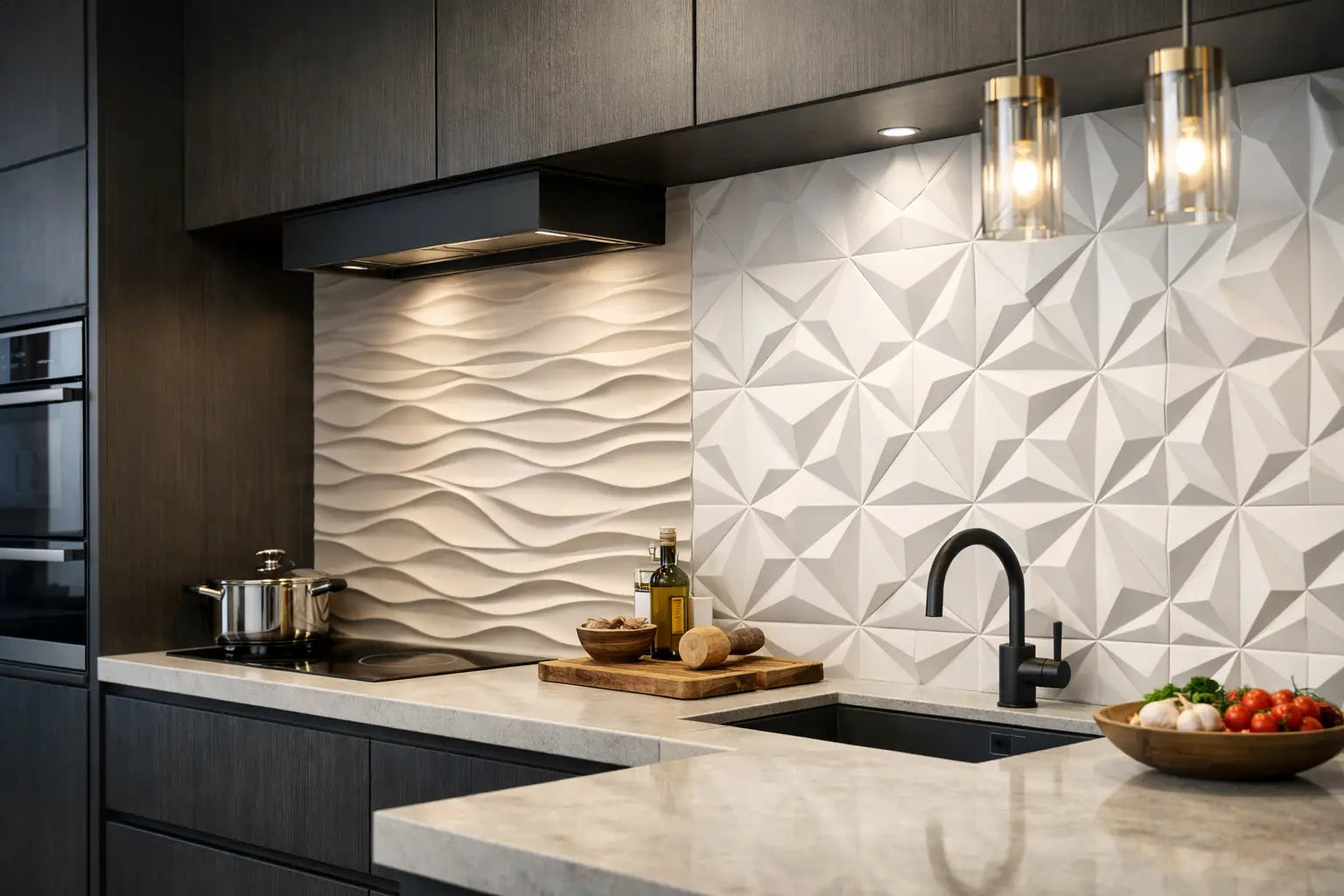
In a kitchen, the wall is never a secondary player. It receives splashes, sets the mood, and immediately defines the room's character. This guide to kitchen wall panels was conceived for those who want to go beyond simple functional coverings and choose a solution that is decorative, durable, and coherent with a well-kept interior.
The right wall panel can transform an ordinary kitchen into a signature space. Discreet relief, a mineral surface, a contemporary line, or a more assertive architectural effect—everything hinges on the balance between style, resistance, and actual use. This is precisely where the choice deserves a more discerning eye.
Why choose wall panels in a kitchen
A kitchen demands more than just a beautiful finish. Walls are exposed to humidity, temperature variations, grease stains, and frequent cleaning. Wall panels are therefore appealing as much for their visual impact as for their ability to simplify maintenance and add character without undertaking major renovations.
They also allow for the introduction of a decorative dimension that paint alone rarely offers. A textured wall behind a dining nook, a backsplash reinterpreted in a contemporary version, or a vertical section that accompanies storage columns can create the impression of a custom-designed kitchen. For a renovated apartment as well as for a more ambitious residential project, this depth effect immediately changes the perception of space.
Another often underestimated advantage: some panels contribute to acoustic and thermal comfort. In open-plan kitchens, this aspect is important. A room that resonates less and feels more enveloping becomes more pleasant for daily living.
Kitchen wall panel guide: where to install them
The first instinct is often to think only of the backsplash. However, the kitchen offers several areas where wall panels can make sense, provided technical constraints are respected.
Behind the countertop, it is essential to choose a surface compatible with humidity and easy to clean. If the area is located directly behind cooking hobs, heat resistance becomes a central issue. Not all decorative panels are intended for this direct use. In this case, it may be relevant to use the panel on adjacent walls or in a less exposed area, while maintaining technical protection behind the cooking zone.
On an accent wall, the creative scope widens. A geometric relief, a subtle wave, or a more sculptural composition can adorn the dining area, frame an indoor glass partition, or add rhythm to a very sleek linear kitchen. This is often the best ground for a high-end finish, as maintenance requirements are simpler to manage here.
Around an island or in a kitchen open to the living room, wall panels also have a clear visual function: to create a link between the kitchen and the living space. They avoid the overly technical or standardized effect that some new layouts can give.
Which materials to favor in the kitchen
The choice of material determines durability, aesthetics, and maintenance level. There isn't a single answer, but rather the right material for the right location.
PVC and laminates appeal for their practicality. They are resistant to humidity, easy to clean, and suitable for utilitarian areas. However, their appearance can sometimes seem more standard if a truly decorative presence is sought.
Glass or aluminum meet the demands of an exposed backsplash well. The result is clean, contemporary, and hygienic. On the other hand, the style is colder, less textured, and sometimes less warm in a kitchen designed as a living space.
Gypsum-based panels or 3D wall panels offer a completely different aesthetic dimension. Their relief brings an immediate architectural signature, with a more sophisticated and timeless feel. They are particularly interesting on accent walls or surfaces less directly exposed to water and heat. Once properly prepared and painted, they can achieve a very elegant finish, with a material quality that flat surfaces rarely imitate.
One must simply remain realistic: in a kitchen, a highly decorative panel must be chosen with good sense. The more the area is subject to splashes, the more the finish and protection must be adapted.
How to match wall panels to the kitchen style
A beautiful kitchen is not built on an accumulation of effects. The wall panel should enhance the ensemble, not compete with it.
In a minimalist kitchen, a fine, repetitive relief generally works better than a spectacular pattern. Sober geometric lines, soft undulations, or regularly patterned panels extend the elegance of smooth fronts, mineral countertops, and neutral palettes.
In a warmer interior, panels painted in mineral tones, greige, off-white, sand, or taupe create a discreet depth without making the room feel heavy. Light glides over the reliefs and gives that sense of living material that immediately enhances the space.
For a bolder kitchen, it's possible to embrace a signature panel. A textured wall behind a table, a composition with integrated lighting, or a more sculptural relief can elevate the room to a decidedly high-end aesthetic. The key remains mastery. If the fronts, floor, and lighting already have strong personalities, the panel should provide structure, not overload.
Criteria to check before buying
A kitchen wall panel is chosen with the eye, but also with method. Aesthetics count a lot, however, ease of use makes a difference over time.
Ease of maintenance should be a top priority. A properly painted or finished surface will be easier to wipe down daily. One must also consider the actual cleaning frequency of the area concerned. A wall near the sink does not have the same requirements as a decorative wall three meters from the cooking surface.
Compatibility with paint is a real asset. It allows the panel to be adapted to the desired atmosphere, but also to update the room later without replacing the entire covering. For lovers of evolving interiors, this is a tangible advantage.
Weight, installation method, and joint quality also matter. A simple residential project does not have the same constraints as a kitchen integrated into a complete renovation. Individuals often look for clear and reassuring installation. Professionals, on the other hand, will focus more on the regularity of formats, the stability of the material, and the quality of the final finish over a large area.
Installation and finish: what really makes a difference to the result
Even a very beautiful panel loses its value if the installation is approximate. In a kitchen, precision is quickly noticeable. Alignments, cuts, joints, and finishes around outlets or tall cabinets require real attention.
The substrate must be sound, clean, and stable. An irregular or crumbling wall compromises adhesion and the appearance of the relief. Then, the surface finish plays an essential role. Depending on the material chosen, a primer and suitable paint can improve durability, maintenance, and the visual interpretation of the relief.
For a premium result, lighting must also be considered. With grazing light, textures stand out more. Under well-placed spotlights, a 3D panel reveals its full presence. In an elegant kitchen, this detail makes a big difference.
Common mistakes to avoid
The first mistake is choosing a panel based solely on a photo. A very pronounced relief might look superb visually, then become overwhelming in a small kitchen. Conversely, an overly discreet pattern can completely disappear once the room is furnished.
The second mistake is wanting to treat the entire kitchen with the same effect. A wall panel often benefits from being used as an accent, especially in a space already rich in lines, handles, appliances, and storage.
The third mistake concerns placement. Installing a decorative panel in an intensely splash-prone area without adequate protection quickly leads to disappointment. It's better to reserve the most exposed surfaces for more direct technical solutions and use the panel where it will fully express its aesthetic value.
Finally, the overall coherence should not be overlooked. A successful kitchen does not depend on a single strong element, but on the quality of the dialogue between materials, volumes, and light.
Which type of wall panel is best for your project
If you are looking for a primarily practical solution for a heavily used wet area, easily washable materials will often be the most relevant. If your priority is architectural elegance and the feeling of a more refined interior, decorative embossed panels clearly have an advantage on accent walls.
For a renovation that aims to combine style and character, 3D gypsum models hold a special place. They add depth, remain customizable with paint, and create a more refined ambiance than a purely utilitarian covering. It is this alliance between design and visual comfort that appeals to demanding individuals and interior design professionals alike. In this spirit, a well-thought-out selection like that of EFFET MARBELLA particularly suits contemporary kitchens seeking a signature without losing clarity.
A successful kitchen is not just functional. It must also leave an impression. If your wall can do more than protect a surface, then it deserves to be chosen as a true design element.


