
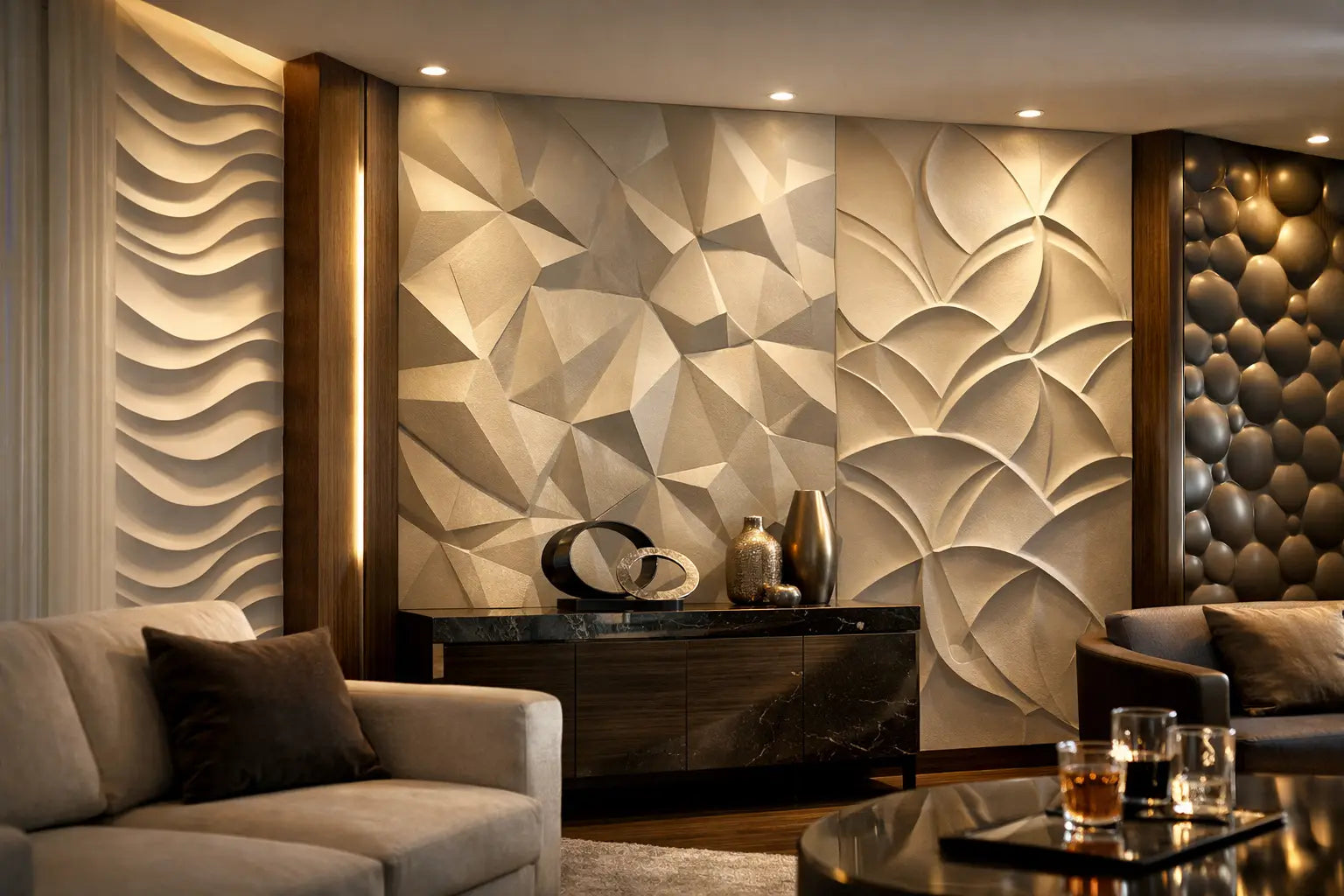
A remarkable wall is not limited to a bolder color or a more graphic wallpaper. It creates depth, captures light, and gives intention to the entire room. This premium decorative wall material guide helps you choose a solution worthy of a refined interior, considering visual rendering, daily use, budget, and installation quality.
In a contemporary living room, an entrance hall, or a master suite, the right covering transforms an ordinary surface into an architectural element. However, not all materials offer the same depth, customization freedom, or durability. The choice therefore deserves more than a simple aesthetic decision.
What defines a premium decorative wall
A high-end material is first recognized by its presence. Its relief must remain precise, its lines regular, and its joints discreet. Natural or artificial light must reveal the volumes without highlighting manufacturing defects. This is particularly true for geometric panels, undulations, and sculpted decorations: their strength depends on the finesse of the design as much as on the quality of the material.
Durability is just as important. A decorative wall is a lasting visual investment, not a trend to be replaced after a few seasons. Opt for a surface that accepts a painted finish, resists everyday knocks, and whose style can evolve with the furniture. A mineral shade today can give way tomorrow to a warm white, a sand beige, or a deep green without changing the wall covering.
Finally, practicality should not be treated as a detail. The weight of the material, its compatibility with the support, the necessary cuts, and maintenance determine the success of the project. A premium solution must offer a spectacular result, without making the renovation unnecessarily complex.
3D plaster, a signature choice for refined interiors
3D plaster wall panels hold a special place in the world of wall decoration. They do not seek to imitate a material: they create a true architectural skin. Their relief brings a depth that paint, wallpaper, and most flat coverings cannot reproduce.
Plaster stands out for its mineral, matte, and timeless appearance. Once painted, it offers a particularly elegant visual continuity, as if the decoration had been drawn directly into the wall. Geometric line models structure a living room or reception area. Wave patterns soften a bedroom, hallway, or wellness area. Panels designed to accommodate LED lighting, meanwhile, allow light to become a component of the decor.
Customizable and durable finish
The ability to paint the panels is one of their great assets. It allows the wall to match an existing palette, create a subtle monochrome, or, on the contrary, highlight the relief with a more assertive shade. Matte paints generally enhance the sculptural character of plaster, while a slightly velvety finish can bring a more contemporary touch.
Plaster is also appreciated for its comfort. Its mass can help improve the acoustic and thermal sensation of a room, especially compared to a bare wall surface. It does not replace technical insulation when necessary, but it contributes to a more subdued and enveloping atmosphere. In an open living space or an apartment with reverberating volumes, this nuance has real value.
Points to anticipate
A plaster panel requires a clean, dry, and sufficiently flat support. Installation requires precision, as the alignment of the patterns directly influences the final result. Joints must be carefully treated before painting to preserve the illusion of a continuous composition.
This material is particularly suitable for dry or moderately humid and well-ventilated interior spaces. For a bathroom, it is necessary to evaluate the area concerned, ventilation, and the level of direct exposure to water. Near a shower or in a very humid environment, a material specifically designed for this constraint will be more relevant.
Comparing materials for a premium decorative wall
The ideal choice depends on the desired effect. A material can be superb in one project and less appropriate in another. Here's how to position the main options.
Wood and veneer: warmth before relief
Wood immediately brings warmth and an organic dimension. Vertical battens can elongate a low wall, while a high-quality veneer creates a cozy atmosphere in an office or bedroom. It pairs very well with stone, brass, and natural textiles.
However, wood imposes its shade and grain. It is less easy to reinvent than a painted panel and can visually weigh down a small room when used over a large area. It also remains sensitive to humidity variations depending on the species and finish chosen. For a graphic, monochrome, and very sculptural decor, 3D plaster offers more freedom.
Natural stone and cladding: character, with more constraints
Natural stone gives an impression of permanence. Travertine, slate, marble, or limestone can create an exceptional wall, especially around a fireplace or in a generous entrance hall. Its irregularity is part of its charm and gives the project an almost artisanal dimension.
However, its cost, weight, and support preparation are more demanding. Joints remain visible, maintenance can be more delicate, and some stones require protection against stains. Stone imitation cladding offers a more accessible alternative, but its realism varies greatly depending on the models. In a minimalist interior, the controlled relief of plaster panels can produce an equally sophisticated effect, with a more contemporary reading.
Textured wallpaper and flexible coverings: immediate effect
Panoramic wallpaper, textile effects, or textured vinyl coverings allow a room to be quickly refreshed. They are well suited when the project is primarily based on color, pattern, or illustration. Their installation is often less cumbersome than that of a mineral facing.
Nevertheless, they remain largely flat. Even the most elaborate textures do not create the same interaction with light as a relief of several millimeters. In a room where the wall is to become the focal point, real volume retains a decisive advantage.
Decorative concrete: a strong aesthetic to master
Polished concrete and concrete effect coatings appeal with their urban sobriety. They form an excellent backdrop for contemporary furniture, black joinery, or sculptural light fixtures. But imperfect application can reveal traces, color differences, or micro-cracks that do not always correspond to the expected level of finish.
Concrete is particularly convincing in large volumes bathed in light. In a more compact or poorly lit apartment, it can appear cold. A 3D panel painted in a light tone retains the contemporary spirit while adding movement and softness.
Choosing the right material according to the room
In the living room, look for a solution that interacts with light. A large wave pattern behind a sofa, or a geometric composition on the TV wall, creates an elegant focal point without cluttering the space. Indirect lighting or oriented wall lights enhance shadows and give the decor a different presence throughout the day.
In a bedroom, the headboard wall is the most natural location. Fluid reliefs, vertical lines, and muted colors find a calming balance there. Avoid overly fragmented patterns if the room is small: a large, repetitive design will give a more serene feeling.
In an entrance hall, the material must withstand use while immediately making an impression. A panel painted in a deep shade, combined with a mirror or a slim console, transforms a few square meters into a welcoming sequence. For hotels, offices, restaurants, and residential programs, this ability to create a clear visual identity is particularly valuable.
Installation and light make the difference
Even the most beautiful material loses its impact if the proportions are poorly studied. Before ordering, measure the usable surface, anticipate outlets, switches, wall returns, and cuts. Also determine whether the decor will cover the entire wall or only a framed area. A partial composition can be more luxurious than a full covering when conceived as an architectural panel.
Lighting deserves equal attention. Grazing light reveals reliefs, while frontal lighting flattens them. Wall lights, an LED strip, or spotlights placed at a calculated distance can completely change the perception of a pattern. Integrated LED panels offer a particularly coherent solution when the goal is to combine decor and ambient lighting in a single gesture.
For a residential project as for a more ambitious realization, the EFFET MARBELLA collections allow you to compose an expressive, customizable and durable wall. The right choice is not necessarily the most spectacular material on a sample: it is the one that will give your room a just signature, pleasant to look at every day and timeless enough to accompany your future desires.


