
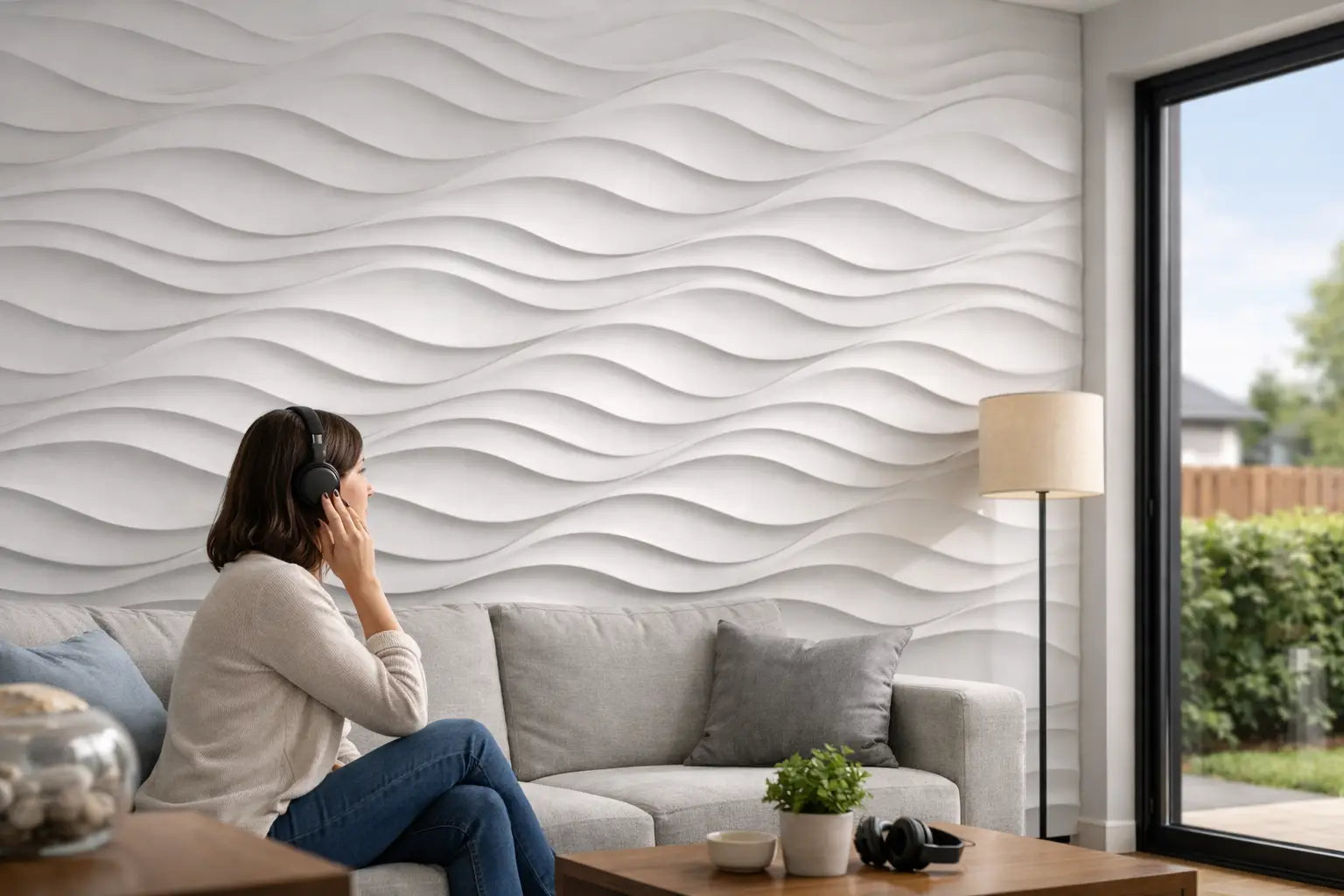
A living room with a pronounced echo, a bedroom that lets in conversations from the hallway or an overly reverberant workspace can undermine comfort, even in a carefully decorated interior. Do wall panels reduce noise? Yes, they can noticeably improve a room's sound environment, but their effectiveness depends on the type of noise, the material, the area covered and the construction of the existing wall.
Gypsum 3D wall panels first and foremost create a strong visual transformation. Their relief produces shadows, gives a wall rhythm and establishes an architectural presence that paint alone cannot offer. Their acoustic contribution is real, provided you understand precisely what it can do and what it does not replace.
Do panels reduce noise or echo?
The distinction is essential. In an empty or sparsely furnished room, sound bounces off hard, smooth surfaces: glazing, tiled floors, painted walls and ceilings. This reverberation produces an echo, a ringing sensation or listening fatigue, particularly noticeable in open-plan living areas, halls, offices and restaurants.
A relief wall panel changes that flat surface. Its recesses, raised shapes and lines help scatter sound waves rather than reflect them uniformly back into the room. Depending on its design, substrate and installation method, it may also help absorb some sound reflections. The intended result is a more subdued space, where voices sound less harsh and music and conversation become clearer.
However, reducing echo in a room does not necessarily mean preventing noise from passing through a wall. Hearing a neighbour, footsteps from the floor above or outdoor traffic is a matter of sound insulation. This depends mainly on the wall's mass, its airtightness, the connections between building elements and whether an insulated wall lining is present.
Absorption, diffusion and insulation: three different effects
To choose a suitable solution, you need to match the problem to the right approach. Acoustic absorption limits reflections within a room. It helps correct an overly resonant atmosphere, for example in a dining room with large glazed openings or a living room with mineral finishes.
Diffusion distributes sound in several directions. This is one of the aesthetic and functional benefits of a relief design: the surface no longer acts as a uniform acoustic mirror. Geometric, wave-shaped or sculptural patterns create depth that also enriches how the space sounds.
Sound insulation, finally, aims to reduce noise passing from one space to another. A decorative panel fitted directly to a wall is generally not enough on its own. It can complement a broader approach, but the best results against outdoor noise or noise between rooms often rely on a combination: treating joints and sockets, an acoustic door, suitable glazing, and a wall lining with insulation and a decoupled structure where the project calls for it.
This distinction does not diminish the value of 3D wall cladding. On the contrary, it helps you use it appropriately. In an interior where echo is the main source of discomfort, a well-chosen decorative surface can make a noticeable difference while becoming the room's focal point.
What really influences acoustic comfort
No panel has the same effect in every setting. A bedroom with curtains, rugs and bedding already has softer acoustics than an entrance with bare walls and a stone floor. The first step is therefore to observe the room: do conversations echo? Does the sound feel metallic? Is the noise coming from another room, or does it seem to bounce around you?
The area covered also matters. A single small decorative panel behind a television mainly provides a visual accent. A whole wall, or a generous area opposite the main reflective surfaces, is more likely to change how the room sounds. In large spaces, it can be useful to distribute treatment across several areas rather than concentrate it all on one wall.
The choice of pattern matters too. Wave panels and models with deep relief create more changes in surface angle, while geometric panels shape the light and give the wall a more graphic character. The aim is not to choose a pattern solely for its acoustic behaviour: the design should remain consistent with the architecture, furniture and use of the room. Comfort comes precisely from this balance between function and elegance.
Finally, installation quality makes a difference. A careful installation on a prepared surface creates a continuous, refined appearance. Cuts around sockets, joins and finishing details need precise attention. In a more ambitious acoustic project, a professional can also assess sound bridges and recommend a suitable wall-lining solution before the decorative facing is installed.
In which rooms are panels most useful?
In a contemporary living room, 3D panels fit naturally behind the sofa, television or bookcase. They add depth to the view while helping soften a room often dominated by smooth materials. A panel painted in a deep shade can create an enveloping atmosphere; a light finish reveals the interplay of light more clearly and makes the space look larger.
In a bedroom, a textured headboard wall creates a more intimate setting. Combined with lined curtains and a rug, it contributes to a calm atmosphere, particularly welcome in urban apartments. It will not cancel out a busy street on its own, but it can make the room feel less cold and less resonant.
Home offices, meeting rooms and reception areas are also particularly suitable applications. Video conferences, calls and discussions require speech to be comfortably intelligible. A decorative wall can enhance the perceived quality of the space without giving it the technical appearance of a recording studio.
For commercial projects, a hotel lobby, restaurant or showroom also benefits from this dual value. The wall becomes a visual signature while contributing to a more pleasant visitor experience. In very busy spaces, however, an acoustic study should be planned if the aim is to meet a specific performance level.
How to improve the result without sacrificing style
Wall panels deliver the best results when they form part of a complete interior scheme. There is no need to cover every wall. A single structured wall, balanced by textiles and well-proportioned furniture, is often enough to change the atmosphere.
For a particularly reverberant room, combine wall relief with curtains, a generous rug, upholstered seating and, if necessary, acoustic elements specifically designed to absorb sound. This approach avoids excessive decoration while addressing several frequencies and reflection areas.
If your priority is to reduce noise from outdoors or a neighbouring home, start by identifying weaknesses in the building envelope: windows, the entrance door, cracks, shutter boxes, lightweight partitions or service penetrations. A gypsum 3D panel can then become the elegant finish of an improved wall, rather than the sole response to a structural noise problem.
Effet Marbella panels are particularly suited to projects where comfort must remain inseparable from style. Paintable and designed to give walls depth, they allow a personal decorative scheme, from bold geometric lines to more organic waves. The right choice will respect the room's acoustic needs while creating a timeless presence.
Before selecting a pattern, spend a few minutes in the room at different times of day. Listen to voices, footsteps, street noise and the quiet between activities: this is often where the idea emerges for a wall that can make your interior more beautiful and, above all, more pleasant to live in.


