
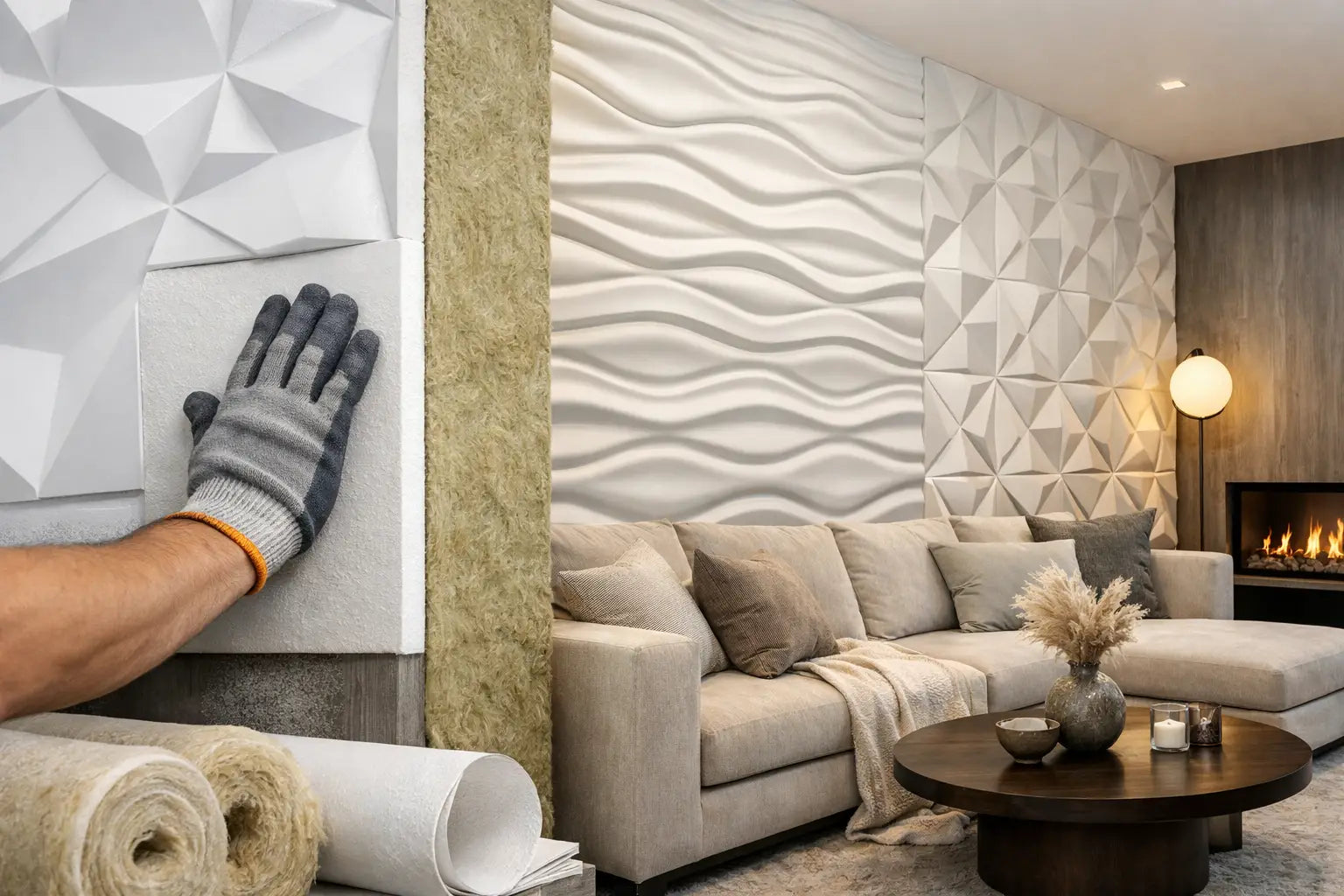
An overly smooth wall can make a room look acceptable, but rarely memorable. Decorative wall insulation, by contrast, immediately brings what contemporary interiors often lack most: relief, comfort and a real visual presence. It does more than cover a surface. It changes the perception of space, improves the acoustic atmosphere and contributes to a more enveloping feeling of warmth.
Why decorative wall insulation is so appealing
The success of this approach comes from a simple expectation. Today, people no longer want to choose between aesthetics and performance. A wall covering should be attractive, of course, but also useful. In a living room, bedroom, office or reception hall, the wall becomes an active surface. It structures the decor, catches light, softens resonances and increases perceived comfort.
This is precisely where decorative wall insulation makes sense. By adding thickness, relief and sometimes a denser material than paint alone, it creates an architectural effect while offering a practical benefit. The result is not a major thermal renovation. It is a targeted improvement designed for spaces where visual and acoustic well-being matter as much as the finish.
What it actually improves in a room
One point must be clear. A decorative wall solution is not intended to replace complete structural insulation in a home suffering significant heat loss. However, it can noticeably improve everyday comfort, especially in living areas and places where walls feel cold, hollow or resonant.
In acoustic terms, relief breaks up the monotony of flat surfaces. This limits some reverberation and creates a more subdued atmosphere. In a minimally furnished room with tiled floors, large windows and few textiles, the difference can be noticeable very quickly. Sound becomes less harsh and the room more pleasant to occupy.
Thermally, the effect depends on the materials and installation. The emphasis here is on comfort near the surface and the overall sensation, not an exaggerated promise. A well-chosen wall covering can reduce the impression of a cold wall and contribute to a softer atmosphere. This is particularly useful in a bedroom or behind a dining area, where people spend time close to the wall.
When decoration becomes a practical design solution
The great advantage of a decorative wall panel is its dual role. It covers and improves. This principle appeals to homeowners, interior designers and residential project developers alike. An overly flat TV wall, a characterless headboard, an impersonal entrance or an excessively resonant reception area can be redefined without reworking the entire room.
Relief plays an essential role here. Geometric patterns create a contemporary, structured appearance. Flowing lines soften the atmosphere and create a sense of movement. Models incorporating lighting strengthen depth and create a more theatrical effect. In every case, the result is more than a covering. It introduces a visual identity.
In a high-end interior, this balance is valuable. Elegance comes not from accumulation but from the right choice. One strong wall may be enough to transform the room.
Decorative wall insulation and 3D panels
Among the most convincing solutions, 3D plaster wall panels occupy a distinct position. They respond particularly well to the search for functional sophistication. Their sculpted surface adds a real architectural dimension while remaining compatible with very different styles: clean contemporary design, warm minimalism, hotel-inspired decor or a more graphic interior.
Plaster is also valued for its refined appearance and its ability to be painted. This is a decisive detail in demanding decorative projects. The wall can be harmonised with the room's palette, its relief accentuated with grazing light, or a discreet shade chosen to let the texture speak for itself.
The other advantage lies in installation. Compared with more extensive work, decorative panels allow a space to be modernised on a simpler schedule. That does not mean preparation should be neglected. A clean substrate, careful workmanship and precise finishing remain essential for a premium result. But the work is much more accessible than completely rebuilding the wall surfaces.
Where this solution works best
Not every room needs the same decorative intensity. Decorative wall insulation is particularly relevant where the aim is to improve the atmosphere while creating a focal point.
In a living room, it works very well on the main wall, behind a sofa or a TV unit. It avoids an empty feel and gives the room a clear visual hierarchy. In a bedroom, it can replace a conventional headboard effectively and create a more enveloping sensation. In an office, it improves the perceived quality of the space while making the atmosphere calmer. Finally, in a corridor or entrance hall, it turns an often-overlooked passageway into a deliberate part of the decorative scheme.
The appeal is just as strong for professional projects and premium rentals. A building lobby, reception, waiting area or show apartment immediately gains a higher-end feel with a carefully treated wall. The wall stops being a background and becomes part of the property's image.
How to choose decorative wall insulation well
The right choice depends first on the room. If the main aim is aesthetic impact, a more pronounced pattern may be appropriate. If the priority is to soften the atmosphere, balanced, elegant relief with a restrained presence is often better. In a small space, an overly busy design can feel heavy. In a large room, by contrast, a pattern that is too discreet may disappear.
Light matters enormously. A relief panel comes alive through shadows. A well-oriented room, or one enhanced with carefully planned wall lighting, will reveal the texture much better. This is often underestimated when choosing.
Overall consistency should also be considered. A very contemporary decorative wall needs furniture that works with it. That does not mean everything must be replaced, but some visual balance is desirable. The more sculptural the wall, the clearer the rest of the room should remain.
Finally, consider the finish over the long term. A paintable surface offers welcome freedom to change the decor. This is a real benefit for owners who want to invest in a durable foundation rather than a passing trend.
What to avoid before starting
The first pitfall is expecting a decorative solution to deliver something it does not promise. It improves comfort but does not replace substantial technical insulation on a seriously deficient wall. The second is choosing solely from photographs. Relief, pattern scale and the way it catches light vary greatly from room to room.
Avoid overdoing it, too. Treating several walls with a strong pattern can quickly reduce the elegance of the effect. In most cases, one well-designed feature wall creates a more refined result than multiple heavily worked surfaces.
Finally, installation deserves close attention. A premium product that is poorly aligned or badly jointed immediately loses visual value. The quality of the workmanship turns a good material into an outstanding finish.
A decorative approach that truly enhances an interior
What makes this solution so relevant today is its ability to meet several expectations at once. It adds character without major renovation. It improves comfort without sacrificing aesthetic clarity. It also personalises a place with greater depth than a simple colour or standard wallpaper.
For those seeking a finish that is both expressive and lasting, 3D wall panels naturally fit this approach. This is one reason brands such as EFFET MARBELLA appeal to people attentive to detail, relief and the perceived quality of every interior surface.
Decorative wall insulation is not a passing fashion. It is a more considered way to think about the wall: as an element of comfort, style and identity. If your interior lacks presence, perhaps start with the most visible surface. That is often where the transformation happens.


