
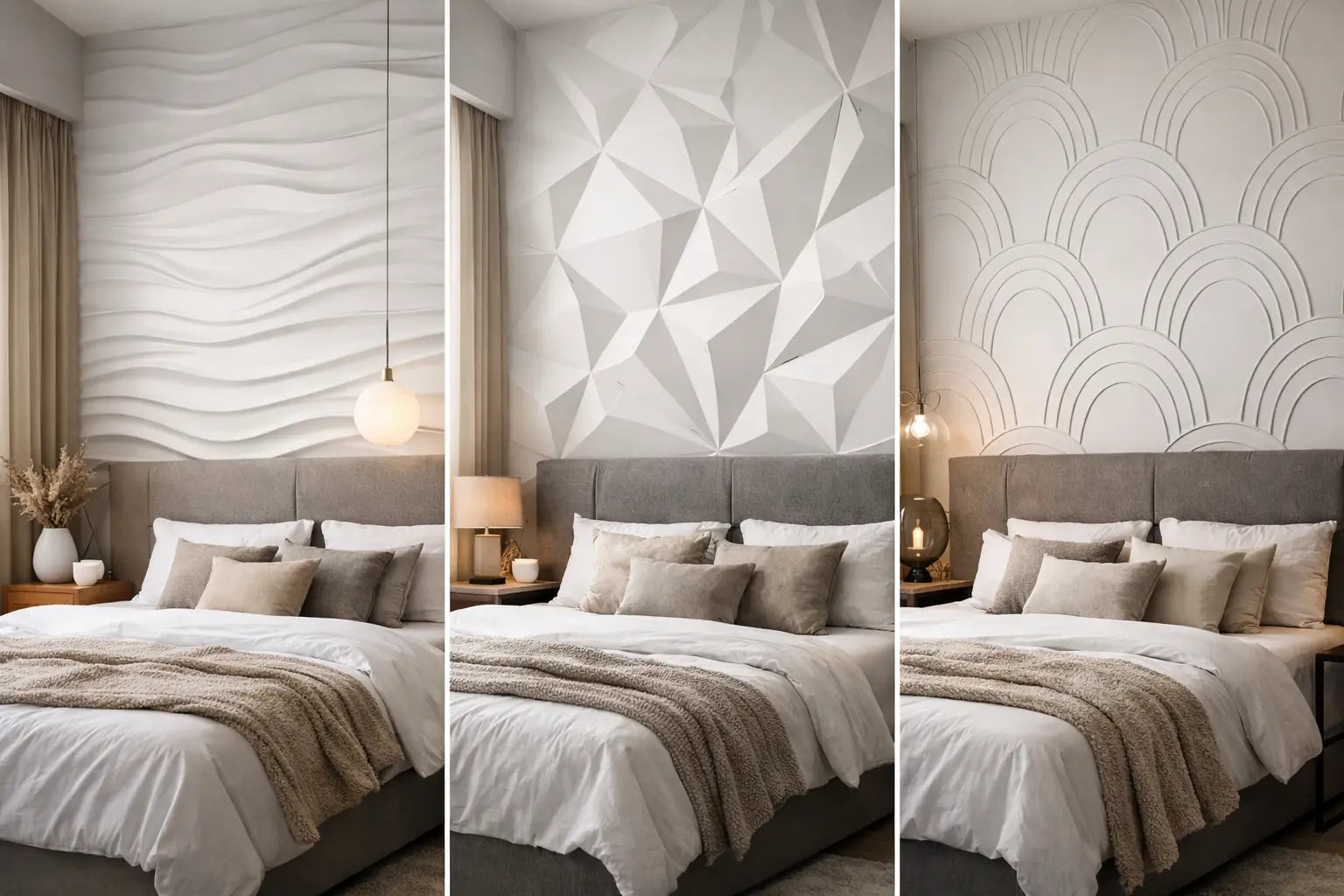
In a bedroom, the headboard wall is never just a plain backdrop. It's what provides perspective, establishes visual balance, and transforms an ordinary sleeping area into a carefully curated interior composition. If you're wondering which wall to choose for your headboard, the right answer depends less on a fixed rule than on the room's architecture, lighting, and the decorative effect you're aiming for.
Which wall to choose for a headboard in a bedroom
The most natural choice is often the wall you see first when entering. This is usually the one that best structures the space and gives the bed a real presence. When a bed is placed on this main plane, the bedroom appears more orderly, more coherent, and above all, more thoughtfully designed.
However, this initial instinct isn't always sufficient. In an attic room, a bedroom with an off-center window, or an atypical layout, the best wall isn't necessarily the most obvious. You need to consider the circulation around the bed, potential symmetry with bedside tables, available height, and how the eye naturally settles in the room.
A good headboard wall fulfills three functions simultaneously: it highlights the bed, stabilizes the room's composition, and allows for a decorative treatment that appears neither forced nor excessively ornamental. When these three elements converge, the overall look immediately feels more upscale.
The central wall, often the right choice
In a classic rectangular bedroom, the shortest wall is often the most suitable. It allows the bed to be centered, balances volumes, and maintains fluid circulation on each side. It's also the choice that offers the clearest visual interpretation, especially if you want to create an enveloping decor with paint, wall lights, or a textured covering.
This placement fosters a sense of calm. The room appears better proportioned, and the bed finds its rightful place without overpowering the space. For an elegant result, this logic remains the most reliable.
When to avoid an available wall
A wall might seem free but not truly suitable. This is the case if a door cuts across the bed's axis, if a low window hinders installation, or if a radiator imposes unattractive constraints. The bed might technically fit, but the composition will then lack breathing room.
You should also be wary of visually cluttered walls. A succession of openings, a poorly placed niche, or a broken angle can weaken the desired effect. A headboard needs a clear background, in the visual sense of the term, to fully express its value.
The criteria that truly make a difference
Choosing the right wall isn't just about measuring available width. The real issue is the relationship between the bed and the room as a whole.
Light plays a significant role. A wall bathed in natural light can magnify a textured finish and add depth to the decor. Conversely, a darker wall can create an intimate atmosphere, provided it's well complemented by lighting. If you're considering a 3D wall covering or a decorative relief panel, grazing light becomes a real asset, as it subtly highlights volumes.
Ceiling height also matters. In a low bedroom, a vertically rhythmic headboard wall visually lengthens the space. In a more generous room, a more enveloping decor can, on the contrary, bring warmth and prevent a too-cold impression. The right wall is therefore the one that corrects or enhances existing proportions.
Finally, there's the intended use. A master bedroom can accommodate a more assertive, almost architectural wall. In a guest room or a rental investment, a more timeless choice that's easier to integrate into various furnishing styles is often sought.
Should you choose the wall opposite the door?
Often, yes. This is the wall that immediately captures attention and sets the tone upon entry. Placing the headboard on this plane creates an obvious focal point. This solution works particularly well if you want to give the bedroom a strong identity without multiplying decorative elements.
That said, if this wall is too exposed, too narrow, or disproportionate, it's better to choose another, more serene axis. The goal isn't just to make an impression at first glance, but to create a comfortable and balanced bedroom for daily living.
And under a window?
This is rarely the most elegant option, unless dictated by layout constraints. A headboard placed under a window can complicate dressing the window, limit curtain choices, and disrupt the sense of visual stability. It's not impossible, but it requires a very well-executed project for the result to appear intentional rather than imposed.
In small bedrooms, this solution can save square footage. You simply have to accept a more functional than scenic result. If your priority is a bedroom with character, it's generally better to reserve the headboard for a solid wall.
Which covering to choose for the headboard wall
Once the right wall is identified, the covering becomes decisive. It's what transforms a simple location into a decorative signature. Paint remains an effective option, especially with a deep or powdery shade, but it doesn't create the same impact as a textured material.
For a contemporary bedroom, a textured wall covering immediately brings a more architectural dimension. It catches the light, adds rhythm, and sometimes replaces frames, wallpaper, or overly imposing furniture all on its own. This is particularly relevant if you're looking for a premium aesthetic, without clutter.
Decorative 3D plaster wall panels offer a clear advantage here. They create volume with a very clean visual interpretation, can be painted according to the room's palette, and add a more enveloping sense of comfort. Their appeal isn't just aesthetic. They also contribute to better acoustic perception and a more muffled feel, which makes sense in a room dedicated to rest.
The right level of visual effect
It all depends on the desired style. A geometric pattern gives a structured and contemporary look. A wave or a more fluid relief softens the whole and is well suited to bedrooms where a more serene atmosphere is sought. If you like very controlled interiors, a wall decor with integrated lighting can enhance the staging without adding superfluous objects.
The key point of attention remains moderation. A headboard should attract the eye without overpowering the rest. In a modest bedroom, an elegant and repetitive pattern is better than an overly complex relief. In a larger space, you can opt for a more assertive treatment, provided you maintain a consistent palette.
Common mistakes when choosing your wall
The first mistake is to think only in terms of available space. A free wall is not necessarily the right wall. If it obstructs circulation or creates an asymmetrical composition that is difficult to correct, the result will look unbalanced even with a very beautiful bed.
The second mistake is wanting to compensate for a commonplace room with too many decorative effects. The headboard wall doesn't need to be busy to be striking. Often, a well-chosen material, a suitable shade, and consistent lighting are enough.
The third, more subtle, mistake concerns scale. A small wall treatment on a large wall looks timid. Conversely, an overly wide decor in a narrow bedroom overwhelms the space. The right wall is also one whose width you can use appropriately, with proportions adapted to the bed and the room's volume.
Depending on the room's configuration, the right choice changes
In a square bedroom, several walls can work. The choice is then based on circulation and visual presence. It's better to favor the one that allows the bed to be centered with ease.
In a rectangular bedroom, the shorter side is often the most harmonious. It gives a sense of structure and avoids the hallway effect. In an attic bedroom, the best wall is generally the one that offers the most readable height behind the bed, even if it's not perfectly central.
In a larger suite, the headboard wall can become a true element of interior architecture. This is where a strong wall covering takes on its full meaning. A well-integrated decorative panel advantageously replaces a simple painted wall and gives the room a more refined presence. For a more ambitious residential or decorative project, this detail often makes the bedroom go from pleasant to memorable.
EFFET MARBELLA is precisely in line with this transformation logic, with 3D wall panels designed to add relief, comfort, and true elegance to the main wall.
Ultimately, choosing which wall to use for a headboard comes down to choosing where the bedroom derives its value. The right location isn't just practical. It's the one that brings calm to the space, reveals volumes, and allows the decor to exist appropriately.


