
A perfectly smooth wall can leave a room feeling surprisingly cold. A carefully chosen finish, by contrast, adds depth to the light, defines the forms and turns an ordinary renovation into a distinctive interior. This guide to wall finishes for renovation helps you make a lasting choice that suits both the style of your space and its technical requirements.
The right question is not simply, 'Which colour?' You also need to ask what the wall should achieve. Softening an irregularity, framing a headboard, making a living room warmer, improving acoustic comfort or creating a memorable entrance: each intention calls for a different finish.
Start with the underlying surface before choosing the decor
The most elegant finish cannot make up for a poorly prepared surface. A successful renovation starts with examining the wall: moisture, active cracks, salt deposits, peeling paint, a crumbling partition or uneven areas. These issues determine the preparation work and, sometimes, the most suitable finish.
On a sound wall with minor imperfections, a skim coat followed by good-quality paint may be enough. If the defects are more visible, a textured finish, thick wallpaper or decorative cladding can offer a more convincing solution than adding layer after layer of filler. The aim is not to conceal problems at any cost, but to create a stable, harmonious surface.
Moisture needs particular attention. In a bathroom, kitchen or wall facing outdoors, address the cause before applying a covering. Insufficient ventilation, leaks and rising damp are never resolved by a simple coat of paint. A wall finish should protect and enhance, not trap an existing problem.
Check the lighting and how the room is used
Light changes everything. Matt paint absorbs reflections and softens minor imperfections, making it suitable for bedrooms and living rooms. A satin finish resists rubbing better and is easy to clean, which is useful in a hallway, entrance or child's bedroom. However, its slight sheen reveals irregularities if the surface is not immaculate.
Also observe the evening lighting. A textured or sculpted wall reveals its presence through side lighting, wall lights or a well-integrated LED strip. In a dim room, choose restrained relief and a light shade to preserve a sense of space.
The main wall finishes to compare
There is no universal finish. The best choice depends on how much preparation is possible, the atmosphere you want, the budget and the time you wish to spend on the work.
Paint: understated and flexible, but demanding of the surface
Paint remains a timeless solution for quickly refreshing an interior. It offers considerable freedom of colour, is easy to touch up and suits almost any room. Warm, soft tones envelop a bedroom, while mineral beige, soft grey or off-white highlight contemporary furniture without dominating the space.
Its main trade-off is its dependence on preparation. On a dented wall, light paint, especially satin, makes every defect visible. Deep matt paint is more forgiving, but it will not give architectural depth to a completely flat surface. It is an excellent finish when the room already has a strong spatial character or when you want understated elegance.
Wallpaper: an immediate decorative effect, chosen with care
Wallpaper introduces pattern, texture or rich colour without covering the whole interior. It is particularly effective on an accent wall, behind a sofa, in a recess or in a bedroom. Non-woven designs generally make installation and replacement easier when the decor next changes.
This option still requires meticulous installation. Pattern matching, corners and the alignment of the strips make the difference between a refined result and an imprecise finish. In busy or damp areas, choose a suitable product and check its durability. A large pattern can enhance a spacious room but visually overwhelm a small space that is already busy.
Decorative plasters: a material with character
Lime-effect finishes, microcement, stucco and mineral plaster add subtle depth that conventional paint cannot reproduce. They suit contemporary interiors seeking a calm, mineral and sophisticated atmosphere. Their appeal lies in the shades, application techniques and slight variations in the material.
The trade-off is technical. Depending on the product, application requires practice and thorough preparation. Touch-ups may remain visible, and maintenance depends on the protective finish applied. For a large, prominent wall, it can be wise to have a sample prepared before approving the whole surface.
3D wall panels: create an architectural signature
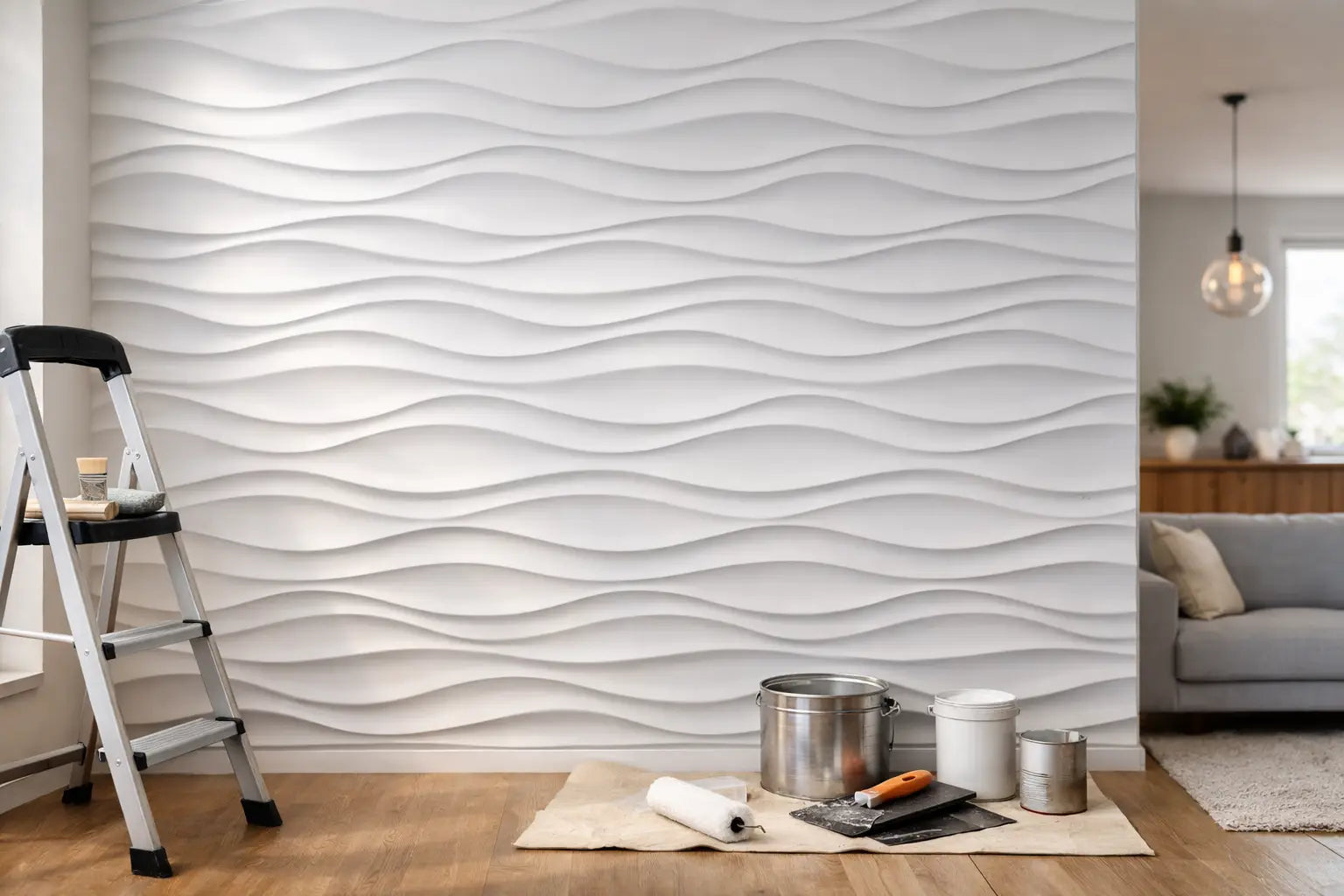
To give a wall immediate character, decorative relief panels offer a strong alternative to flat finishes. Whether geometric, wave-shaped or incorporating lighting, they create shadows that evolve throughout the day. This is particularly relevant for a headboard, media wall, reception area, hallway or living room with otherwise neutral architecture.
Gypsum 3D panels combine visual presence with practical benefits. Their surface can be painted to match your palette, and the relief adds a sense of depth without requiring busy decoration. Depending on the configuration and installation, they can also contribute to the room's thermal and acoustic comfort. At EFFET MARBELLA, the gypsum panel collections are designed to create sculptural walls, from a discreet decorative accent to a more dramatic installation.
This finish does, however, require advance planning for cuts, electrical sockets, corners and lighting. Deep relief is not necessarily desirable everywhere: in a small, crowded room, a single wall is often enough. Restraint is a design choice, not a compromise.
Choose a finish to suit the room
In a living room, look for a finish that supports the furniture without creating visual fatigue. Mineral paint, delicate plaster or a 3D panel on the main wall offers lasting elegance. If you install relief panels behind a screen, plan the cable routes and avoid an overly complex pattern that might distract the eye.
In a bedroom, the headboard area is the natural location for a more expressive finish. Textured wallpaper, soft plaster or panels painted the same colour as the wall create an enveloping effect. Deep tones work well when lighting is controlled; sand, clay and ivory shades maintain a bright atmosphere.
For an entrance or hallway, resistance to everyday wear matters as much as style. Choose washable paint, a durable covering or decorative panels positioned away from areas exposed to direct impact. These passageways benefit from being treated as proper welcoming spaces: well-lit relief can give them an unexpected presence.
In a kitchen or bathroom, always check that the material is compatible with moisture and splashes. Areas directly exposed to water require dedicated protection. A decorative finish can cover the surrounding walls, but it does not replace a waterproof covering where contact with water is part of daily use.
Successful installation and the details that make the difference
The quality of a finish often lies in details you barely notice: a neat junction with the ceiling, properly integrated sockets, a regular corner or a consistent colour across touch-ups. Take time to calculate the areas, order a reasonable allowance and plan the sequence of work. Wall coverings are fitted after dusty work, but before the final installation of skirting boards, light fittings or fitted furniture, depending on the project.
For 3D panels, check that the surface is flat and plan the layout before applying adhesive. Laying a few pieces on the floor helps you visualise the rhythm of the pattern, edge cuts and switch positions. Use accessories suitable for the material and respect the drying time: rushing is one of the most common causes of disappointing finishes.
Finally, think of colour as the last layer of design. Painting relief in the same shade as the walls creates monochrome sophistication. Choosing a slightly darker shade emphasises shadows and gives the pattern a more graphic appearance. Before deciding, examine a sample in natural morning light and again in the evening under the planned lighting.
A carefully renovated wall should do more than look new. It should give the room an identity, depth and comfort that you feel every day.


