
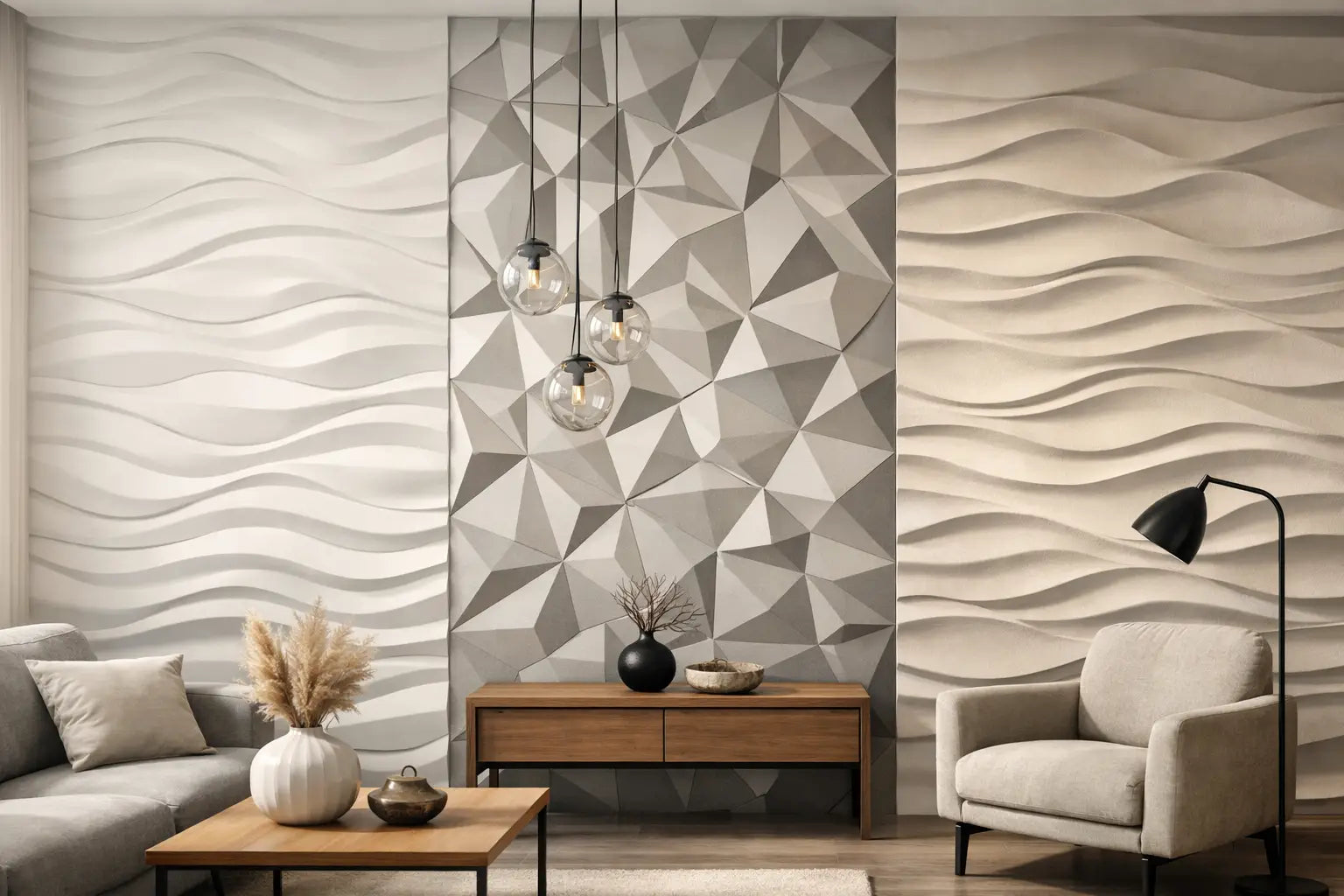
A well-thought-out decorative wall is more than just a strong color or trendy wallpaper. It introduces depth, light, and an architectural presence capable of changing the entire perception of a room. In a contemporary living room, a narrow entrance, or a master suite, relief immediately gives the wall a decorative function.
3D plaster wall panels precisely meet this quest for lasting elegance. Sculpted, paintable, and designed to dress up interiors with character, they create a custom composition without requiring heavy masonry work. The choice of pattern, lighting, and the surface to be covered will make all the difference between a decorative detail and an interior signature.
Why the decorative wall is returning to the center of projects
Current interiors favor clean lines, open volumes, and sober materials. This sobriety can be very refined, but it sometimes leaves walls too smooth, even impersonal. A textured covering then brings what furniture alone cannot always offer: a material that evolves throughout the day.
Natural light emphasizes the hollows and edges of a geometric or undulating panel. In the evening, wall sconces, oriented spotlights, or LED lighting reveal new shadows. The wall becomes alive without the space appearing cluttered. This is a particularly convincing solution when you want to add character to a room without multiplying decorative objects.
Relief also has a more discreet quality: it helps to create a cocooning feeling. Plaster, a mineral and timeless material, integrates equally well into a minimalist universe or a warmer decoration, with wood, brass, boucle textiles, or natural stone. It is not about following an ephemeral trend, but about composing a durable backdrop for years to come.
Decorative Wall France: where to place 3D panels?
The success of a decorative wall depends first and foremost on its placement. The best location is often the one the eye naturally meets upon entering the room. Behind a sofa, as a headboard, or facing a dining room table, the 3D panel structures the volume and provides an anchor point for the layout.
In a living room, a complete wall can accommodate a large pattern, such as a wave or a regular geometric composition. This option suits large volumes and uncluttered walls. If the room is more compact, covering only a central area or creating a frame behind the sofa helps maintain a sense of space.
In a bedroom, the headboard is the most natural location. Soft and continuous reliefs create a soothing atmosphere, while a more graphic pattern brings a contemporary hotel aesthetic. A matte paint in a mineral shade – off-white, warm beige, clay gray, or deep green – will reinforce the enveloping effect.
The entrance also deserves special attention. Often reduced to a simple passage, it can become a true prelude to the home. A textured wall section, combined with a mirror or careful lighting, creates a more architectural first impression. In a hallway, it is generally preferable to choose a low-relief and a light shade to preserve visual fluidity.
Choosing the pattern according to the desired ambiance
The pattern should not be chosen solely from a catalog. It must interact with the proportions of the room, the existing light, and the style of the furniture. A geometric relief asserts a structured aesthetic. It works very well with contemporary lines, black joinery, metal, or furniture with clean shapes.
Wavy panels, on the other hand, soften the space. Their curves evoke movement and create a more organic decor. They naturally complement an interior with tactile materials, dominated by sand tones, light woods, and generous textiles. For a living room or a bedroom, this choice is often more serene than a very angular design.
Panels incorporating LED lighting require a slightly more precise design, but their impact is remarkable. They are suitable for a TV wall, a headboard, or a professional reception area. However, light should not be used to compensate for a poorly chosen pattern: it should emphasize the relief, not overload it.
Before deciding, observe the wall at different times of the day. A very bright room easily supports a deeper design. In a north-facing or dimly lit room, a subtle relief and a light finish will avoid creating too dense an impression.
The benefits of plaster beyond aesthetics
A quality 3D wall panel is not limited to its visual effect. Plaster provides a mineral presence and a neat finish, while offering a surface that can be painted according to the evolution of your decoration. This freedom is valuable: the relief remains, the color changes when you wish.
The panels can also contribute to acoustic comfort by limiting reverberation in certain spaces. In a living room with hard surfaces, an office, or an open dining room, this effect contributes to a more pleasant atmosphere. It does not replace an acoustic study for a major technical problem, but it is a real advantage in an interior design project.
Depending on the configuration, the covering also provides a slight improvement in perceived thermal comfort. Again, it does not replace regulatory insulation of an exterior wall. Its role is decorative, with complementary benefits that enhance the daily enjoyment of the room.
Preparing the installation for a clean result
The quality of the substrate is essential. The wall must be stable, dry, clean, and as flat as possible. Major irregularities, signs of humidity, or active cracks must be treated before installation. A perfectly designed panel will not be able to permanently conceal a degraded substrate.
Take the time to define the layout, i.e., the arrangement of the panels before gluing. This step allows you to anticipate cuts, center the pattern, and prevent a poorly placed joint from breaking visual regularity. For an installation around an outlet, a switch, or fixed furniture, rigorous measurement is essential.
Installation can be accessible to a careful DIY enthusiast, equipped with appropriate products and ready to work methodically. For a large wall, with numerous cuts, LED integration, or high finishing requirements, the intervention of a professional remains a wise choice. The gain is not only measured in time: it is seen in alignment, joints, and corner precision.
After installation, the joints are prepared to create a continuous surface, then the wall can be painted. Matte paints often enhance the relief by softly diffusing light. A satin finish may be suitable for certain areas, but it accentuates shadows more and requires impeccable execution.
Designing a decor that doesn't tire
The risk of an accent wall is wanting to show everything at once. An expressive relief, an intense color, decorative luminaires, and heavily furnished furniture can quickly compete. Elegance often comes from balance: a sculptural wall, then calmer elements around it.
In a global project, the 3D panel can also create continuity between several spaces. Repeating the same pattern punctually in an entrance and a living room, for example, gives a discreet coherence to the whole. The collections offered by Effet Marbella allow imagining this continuity while adapting the rhythm and dimension of the decor to each room.
A successful decorative wall does not seek to fill a void. It reveals the proportions of a place, accompanies light, and creates a feeling of lasting comfort. Start with the wall that deserves to be looked at, choose a relief that suits you, then let the material give your interior the depth it was waiting for.


