
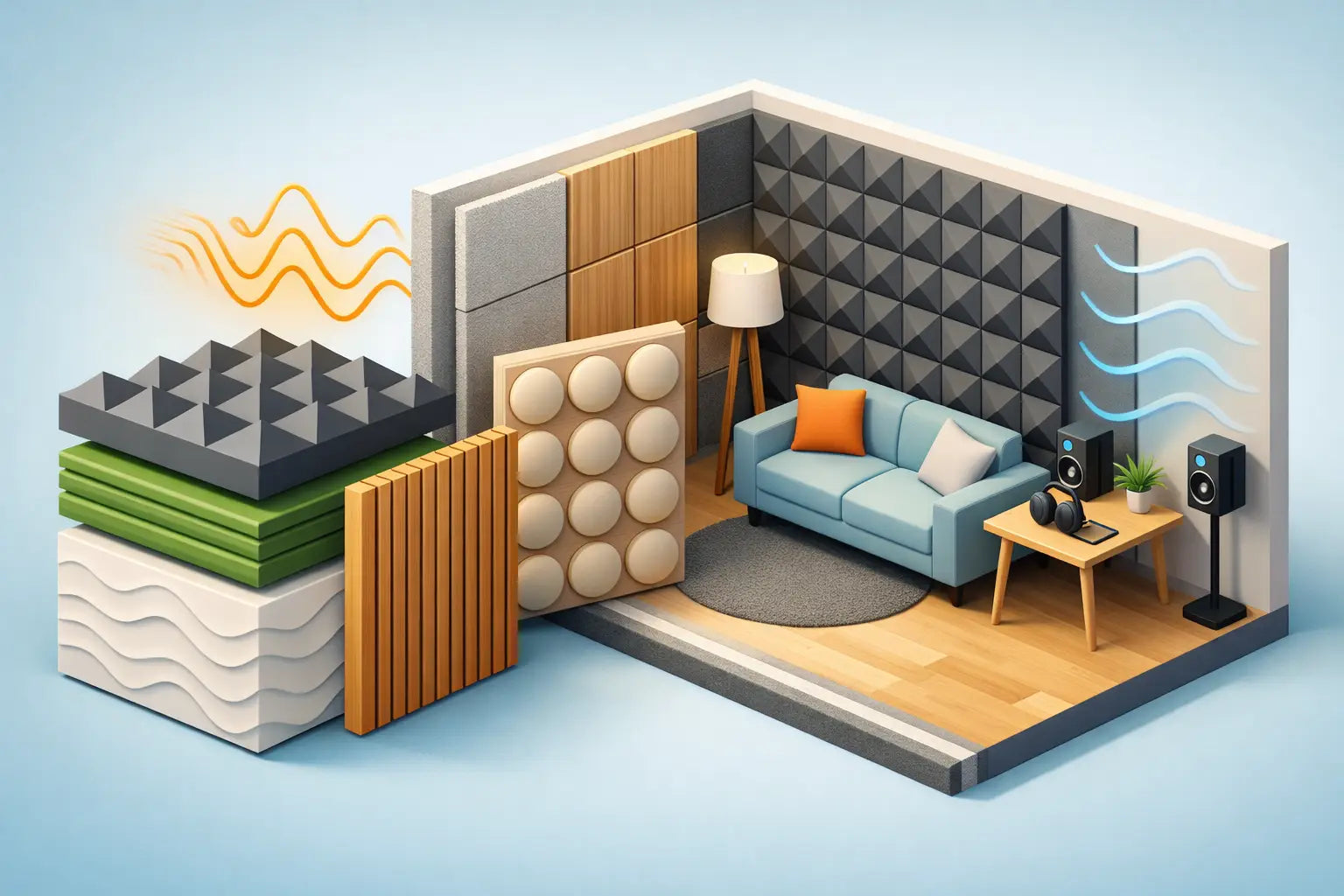
A beautiful but hollow wall is quickly noticeable. In a living room, bedroom, or office, the visual effect is not enough if the space echoes, amplifies voices, or allows noise to travel from one room to another. This is precisely where 3D sound insulation panels come into their own: they add relief, structure the interior, and contribute to a more refined sense of acoustic comfort.
Why 3D sound insulation panels are so appealing
Their strength lies in this double promise rarely met with such elegance. On one hand, they transform a flat wall into an architectural surface. On the other hand, they help reduce certain everyday noise nuisances, particularly reverberation and the echo effect in a room.
However, it is necessary to be precise on this point. A decorative 3D panel does not have the same role as a technical complex for a recording studio or a professional acoustic partition. It does not magically block all noises. On the other hand, it can significantly improve the perceived comfort in an interior, especially when it is well chosen, correctly installed, and integrated into a coherent room in terms of materials.
For many homeowners and decorators, it is precisely this balance that makes the difference. We are not just looking to treat sound. We also want to create a more sophisticated, enveloping, and visually accomplished atmosphere.
What sound insulation really means in an interior
In common usage, the term "sound insulation" is often used to describe anything that reduces noise. In practice, there is an important nuance between insulation and acoustic correction.
Sound insulation primarily concerns the reduction of sound transmission from one space to another. Acoustic correction, on the other hand, acts more on the sound quality within the room itself, by limiting resonance, excessively harsh sound reflections, and the "boom box" effect felt in very smooth volumes.
3D wall panels often operate at the intersection of these two needs. Their relief breaks up uniform surfaces, which can help diffuse sound differently. Certain materials, such as plaster or compositions designed for interior comfort, also add interesting mass and density. The result therefore depends on the product, its thickness, its support, and the overall configuration of the room.
In other words, if your goal is to make a living room more hushed, a bedroom more calming, or an office more pleasant, the 3D panel is a very relevant option. If your problem is mainly due to noisy neighbors or significant structural nuisances, a more comprehensive treatment should be considered.
Which materials to favor for 3D sound insulation panels
The material changes everything, both in appearance and performance. In a high-end approach, 3D plaster panels are appealing for their clean finish, architectural presence, and ability to integrate into both contemporary and more classic interiors.
Plaster offers an elegant, durable, and generally paintable finish, allowing the wall to harmonize with the rest of the project. Its density can contribute to a better sense of wall solidity, which indirectly affects acoustic comfort. It should not be presented as a miracle solution, but in a domestic room, it contributes to a more controlled environment than that of a simple smooth wall.
Other panels may rely on foams, fibers, or lighter composites. They can be effective in certain contexts, particularly when the primary goal is sound absorption. The compromise is often aesthetic. Many highly technical solutions lack decorative presence. Conversely, a premium 3D wall panel allows for the combination of sculptural relief, refined finish, and improved comfort.
It is this intersection of design and function that is currently attracting demanding individuals and interior design professionals alike.
In which rooms is the effect most noticeable?
Not all rooms react in the same way. The more hard and smooth surfaces an space has, the more perceptible the contribution of a relief wall covering becomes.
In a living room, 3D panels are particularly effective behind a sofa, around a TV area, or on a main wall. They create a strong focal point and at the same time soften the sound sensation of a room that is sometimes very open.
In a bedroom, installation at the head of the bed works very well. The wall gains visual depth, and the atmosphere becomes more enveloping. Here, we are looking less for measured technical performance than for an impression of calm, texture, and comfort.
In a home office, the benefit is immediate. Calls, video conferences, and concentration benefit from a less reverberant environment. For an elegant workspace, this is a much more refined solution than a purely utilitarian treatment.
Hotel, restaurant, or real estate development projects can also find real value in it. A well-chosen 3D wall gives the place a signature while improving the overall experience of the occupants.
How to choose the right 3D panel without making a mistake
The first criterion remains the actual objective. If you are mainly looking for a signature wall with an appreciable gain in acoustic comfort, decorative plaster models are particularly consistent. If your absolute priority is sound absorption, you need to check the product characteristics and not stop at the visual aspect alone.
The design of the relief also matters. A strong geometric pattern, a more fluid wave, or a more sculptural composition will not only have an aesthetic effect. The relief also influences how the surface interacts with sound reflections. This does not replace an acoustic calculation, but it contributes to the final experience.
Thickness, manufacturing quality, and joint precision are equally important. A premium panel offers a more elegant visual continuity and a more architectural feel. It is often this level of finish that distinguishes a convincing decorative wall from a simple veneer.
Finally, think about paint and light. A matte shade generally enhances volumes better and reinforces the sophisticated effect. Grazing light, natural or integrated, reveals the reliefs and amplifies the transformation of the room.
Installation and acoustic result: the detail that changes everything
Even a beautiful product loses its value if the installation is neglected. An irregular support, visible joints, or unsuitable glue compromise both aesthetics and the perception of quality.
For 3D sound insulation panels, installation also affects the functional rendering. A stable, continuous, and well-prepared installation promotes a more consistent result. Depending on the project, some choose to combine the panels with an underlayment or a more complete wall configuration. This is particularly relevant in spaces where noise is a real constraint.
Customers who enjoy renovating themselves appreciate the relative simplicity of this type of covering, but for a large wall, a complex pattern, or a high-end requirement, the intervention of a professional often remains the best choice. The final result is cleaner, more durable, and visually more luxurious.
The real advantage: a transformed room, not just decorated
What distinguishes a successful 3D wall is not just its relief. It's the atmosphere it creates. The room seems more thoughtful, denser, more serene. The eye stops on the wall, but the comfort is felt throughout the space.
This is where the value of the product goes beyond mere decoration. A good wall panel does not just clad. It brings an architectural presence, corrects the banality of an overly smooth interior, and supports a quality of daily use.
For a contemporary apartment, a renovated house, or a more ambitious development project, this approach makes a lot of sense. It meets a very current expectation: living in a beautiful place, but also one that is more pleasant to inhabit.
At a brand like EFFET MARBELLA, this logic is particularly clear. The 3D panel is not treated as an accessory. It becomes an element of interior composition, designed to combine elegance, material, and comfort.
Should you invest in 3D sound insulation panels?
If you expect an absolute improvement against all noises, the answer will depend on the technical context of the building. However, if you are looking for a high-end solution capable of giving character to a wall while improving perceived acoustic comfort, the investment is fully justified.
The right choice is based on an honest assessment of your needs. In a reverberant living room, a visually cold bedroom, a home office, or a public reception area, 3D panels offer a concrete and immediately visible benefit. Their interest grows even more when the project seeks a durable, customizable, and significantly more refined finish than a standard covering.
A successful interior is not just judged by what it shows. It is also measured by what it makes you feel - calm, depth, presence. It is often on a well-chosen wall that this difference begins.


