
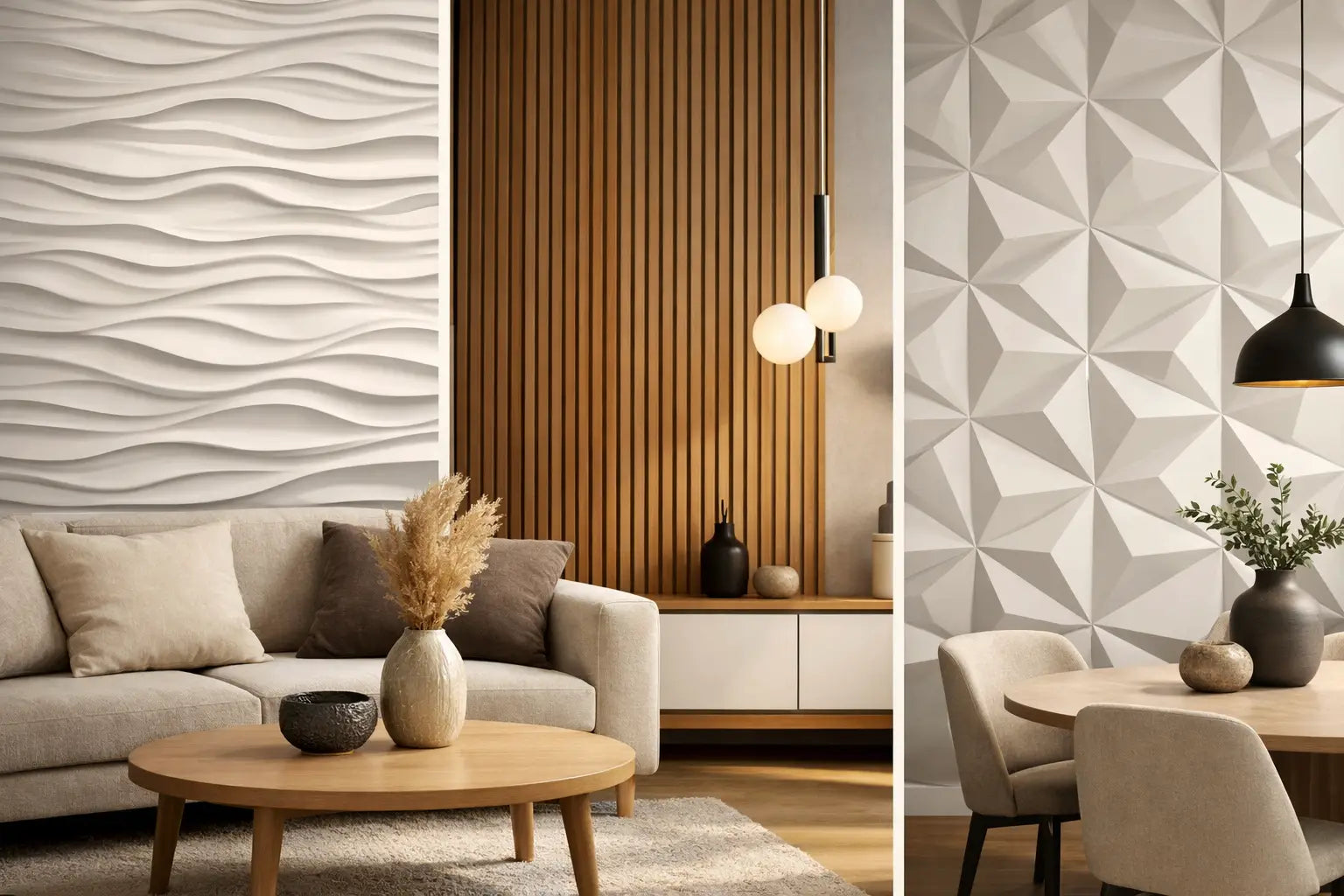
In an apartment, every wall counts. When square footage is precious, decoration cannot simply adorn the space—it must also give it character. This is precisely where decorative wall panels for apartments make perfect sense: they transform a flat surface into an architectural element, structure a room without weighing it down, and provide a visual presence that paint alone cannot offer.
Why apartment decorative wall panels are so appealing
A contemporary apartment often suffers from the same flaw: clean volumes, but walls without relief. The result is neat, of course, but sometimes cold. Adding a 3D wall panel helps correct this with a targeted intervention, without undertaking heavy renovation.
The interest is not just aesthetic. A well-chosen decorative panel can also contribute to daily comfort. 3D plaster models, for example, offer a more enveloping feel, soften sound perception, and contribute to a warmer atmosphere. For an open living room, a minimalist bedroom, or a somewhat neutral hallway, this type of covering immediately creates a more sophisticated perception of the space.
Another decisive advantage in an apartment: a high-end effect does not necessarily depend on a large surface area. A single section of wall behind a sofa, a headboard, or a dining area can be enough to change the visual balance of the entire room.
Where to install decorative wall panels in an apartment
The right location makes all the difference. In an apartment, it's not about covering every wall, but about choosing the area that deserves enhancement. In the living room, the main wall remains the most natural choice. Behind the sofa or facing the entrance, it creates a focal point and gives the impression of a professionally designed interior.
In a bedroom, 3D panels work particularly well as a headboard. The relief advantageously replaces an added wall decoration and provides a more architectural finish. It's an elegant solution for achieving a premium look without multiplying decorative objects.
The entrance is often neglected, yet it sets the tone from the very first seconds. A geometric or wavy panel in this space immediately brings personality, even in a small area. As for the home office, it gains visual depth and distinction, which is desirable when you want a more inspiring and polished setting.
Finally, the dining room lends itself very well to this type of cladding, especially in apartments where living areas are open. The panel can then serve as a visual marker and subtly delineate functions without compartmentalizing.
Which style to choose depending on the desired ambiance
Not all decorative wall panels for apartments produce the same effect. The choice of pattern directly influences the perception of the room.
Geometric panels are suitable for contemporary, minimalist, or architecturally inspired interiors. They bring rigor, rhythm, and a highly controlled elegance. In a modern apartment, they reinforce a clean and premium aesthetic.
Wave or curved panels soften the overall look. Their movement creates a more fluid, calmer, often more sensory atmosphere. They integrate well into a bedroom, a living room with soft lines, or an interior seeking to avoid a too strict impression.
Panels with integrated LED lighting offer a more staged look. They are not suitable for all projects, but in an apartment with a strong style, they can produce a very contemporary result. However, the rendering depends on the light, ceiling height, and desired level of sophistication. In a small space, they should be used sparingly to maintain balance.
Material makes the difference
At first glance, several wall coverings may seem comparable. In reality, the material changes everything: the touch, the depth of the pattern, durability, and the overall perception of quality.
3D plaster stands out for its refined finish and its ability to create a clear, precise, and elegant relief. It offers a more noble presence than many lightweight alternatives. Its other advantage is its paintable surface, which allows the panel to be perfectly adapted to the project's palette. Luminous white, mineral beige, soft gray, a more sustained tone: the decor truly becomes custom-made.
In an apartment, this flexibility is invaluable. It allows a wall panel to be integrated into an existing universe without disruption. And for customization enthusiasts, it's a simple way to achieve a finish consistent with furniture, textiles, and the overall ambiance.
How to avoid an overly busy effect
The main risk with a decorative panel is not a lack of impact, but an excess. In an apartment, elegance often comes from restraint. Strong relief on all walls can quickly tire the eye and reduce the feeling of space.
The right approach is to treat the panel as an architectural accent. One feature wall is usually enough. If the pattern is very prominent, it's best to keep furniture with simple lines and a controlled palette around it. Conversely, if the apartment is very minimalist, a more expressive relief can bring the missing dimension.
Everything therefore depends on the context. In a small room, a too dense pattern can visually compress the space. In a large room with little personality, the same pattern can become the element that finally brings relief and rhythm.
Colors, light, and perception of space
Color not only affects style, but also how relief is perceived. Light tones subtly reveal texture and maintain a sense of openness. They are particularly well suited to urban apartments, where natural light varies depending on exposure.
Deeper tones create a more theatrical and enveloping effect. On a well-lit wall, they can be striking. However, in a dark or narrow room, they require more caution. The relief then absorbs more light, and the rendering becomes more intense.
Lighting therefore deserves real consideration. Grazing light enhances volumes and reveals the panel's design. This is particularly interesting in a living room or entrance. Conversely, uniform, flat lighting reduces the sculptural effect. The panel remains decorative but loses some of its strength.
Installation: simple in appearance, successful in detail
One of the great strengths of current wall panels is their accessibility. They allow for a spectacular result without heavy construction. That said, the quality of the final rendering largely depends on preparation.
The support must be clean, stable, and even. Alignments must be precise, especially with repetitive or geometric patterns, where the slightest approximation is immediately visible. In an apartment, it is also necessary to anticipate angles, outlets, wall returns, and finishes around joinery.
For a careful amateur, certain projects remain entirely feasible. For a large surface, a complex pattern, or a very visible area, the intervention of a professional may be judicious. This is not a matter of absolute difficulty, but of aesthetic requirement. A premium panel deserves a high-quality installation.
A decorative choice that also brings comfort
Style first catches the eye, but the feeling in the room is just as important. In an apartment, questions of resonance, thermal comfort, and daily well-being are never secondary. Well-designed plaster panels can contribute to a more muted and pleasant living atmosphere.
This is a point often underestimated at the time of purchase. Yet, a wall that better captures light, adds material, and improves acoustic perception truly changes the experience of the place. We are no longer talking only about decoration, but about the quality of the space.
For those seeking a solution that is both expressive and durable, collections like those offered by EFFET MARBELLA precisely meet this expectation: creating distinctive, elegant interiors designed to last.
How to choose your decorative wall panels for an apartment
Before selecting a model, you must look at the room as it truly is, and not as imagined in an inspirational photo. Ceiling height, light, available surface, furniture style, and even the finish level of the rest of the apartment influence the right choice.
A successful panel does not seek to dominate everything. It dialogues with the space. It provides a visual signature but allows the room to breathe. It is this mastery that gives a high-end result.
If you want to transform an apartment without undertaking a complete overhaul, the wall is often the best starting point. Well treated, it does not just adorn the interior: it gives it a presence, depth, and elegance that are felt every day.


