
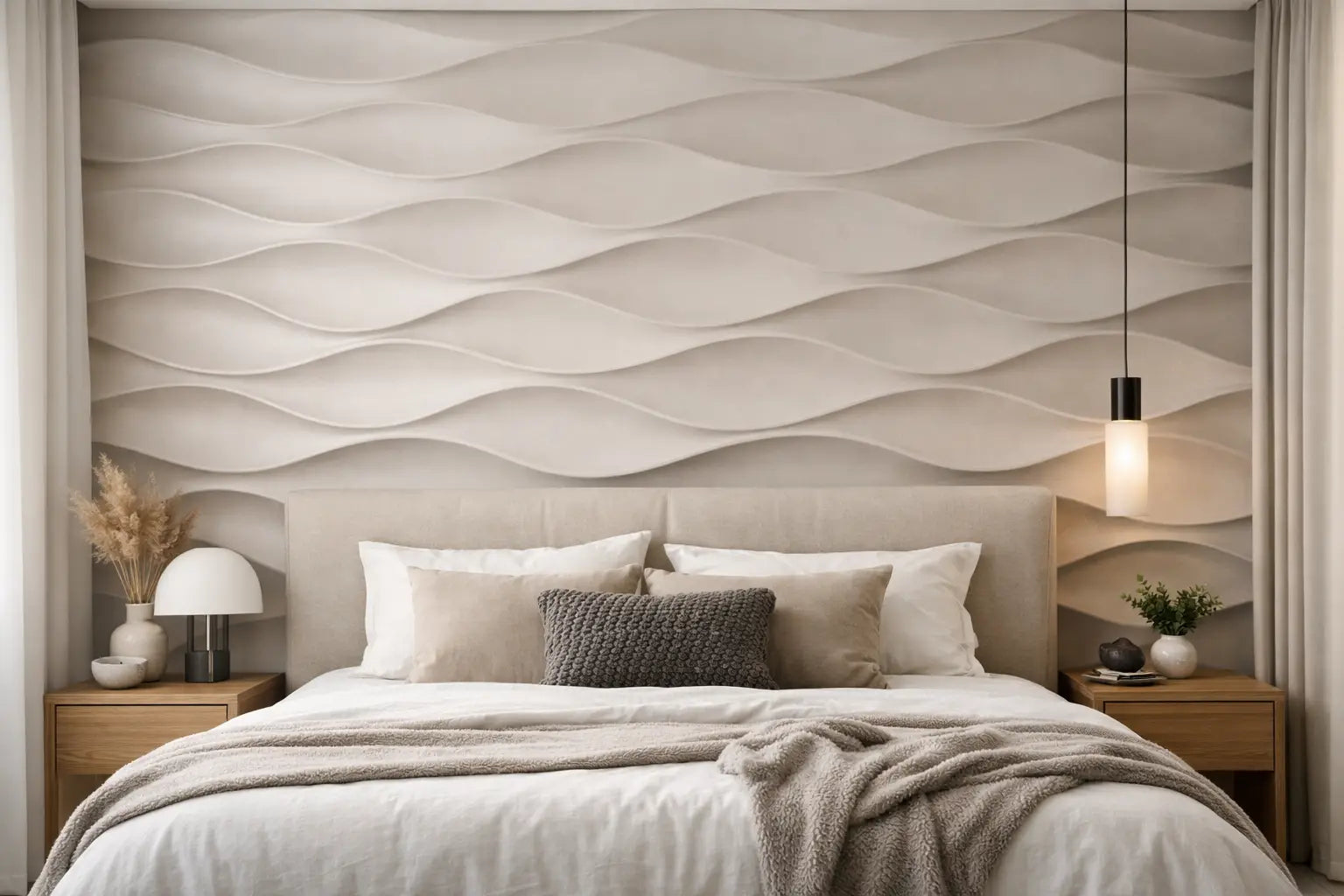
A successful bedroom depends on more than the choice of bed or bedding. The wall behind the headboard immediately sets the tone. Every example of a bedroom accent wall panel shows the same thing: when relief, proportions and lighting are carefully considered, an ordinary wall becomes a distinctive decorative feature. Gypsum 3D wall panels create this architectural effect with lasting elegance, without overwhelming the space.
Why create an accent wall in a bedroom?
A bedroom calls for calmer decoration than reception rooms, but it should not feel impersonal. An accent wall defines the sleeping area, frames the bed and adds depth that paint alone cannot provide. It is a particularly valuable solution in contemporary interiors, where lines are simple and every material matters.
3D gypsum adds a sculptural presence while remaining understated. Depending on the design, it can soften a room with waves, give it a more graphic character through precise geometry, or establish a hotel-style atmosphere with integrated lighting. Its surface can be painted to match the existing palette or evolve with the decor over the years.
This choice also contributes to comfort. Gypsum panels help improve the wall's thermal and acoustic insulation. In a bedroom facing a street, a corridor or a living area, this quality strengthens the sense of retreat. The result is more than decorative: it contributes to a quieter, more intimate atmosphere.
Bedroom accent wall panel ideas: 5 inspiring styles
1. Wave panels for a soothing bedroom
Wave patterns are among the most natural choices for a restful space. Their flowing lines avoid the rigidity of a perfectly flat wall and create shadows that change gently throughout the day. Behind a rounded bed, an upholstered headboard or textured bedding, they create an enveloping setting.
To retain this softness, choose a mineral shade: off-white, sandy beige, greige, pale clay or very light grey. Matt paint reveals the relief delicately. Side lighting from two discreet wall lights will emphasise the curves without turning the bedroom into a theatrical setting.
This type of panel suits both small and large bedrooms. In a compact space, a fine wave pattern is often more appropriate than very deep relief. In a spacious suite, stronger waves can cover the entire wall and visually extend the width of the bed.
2. Vertical geometry to create a sense of height
In a bedroom with a low ceiling or an urban apartment, panels with vertical lines immediately create a sense of height. Their rhythm guides the eye upwards and gives the wall a clear architectural presence. This is an elegant response to a room that feels too low or too horizontal.
The installation can stop at the width of the bed and its bedside tables, like an oversized frame. It can also extend from wall to wall for a more contemporary look. The first option is ideal when you want to keep the composition light. The second suits minimalist bedrooms in which the wall becomes the central feature.
Geometric patterns call for a degree of restraint in the furniture. Choose simple bedside tables, lamps with controlled proportions and an uncluttered headboard. If the panels already establish a strong rhythm, too many decorative objects can obscure their elegance.
3. Tone-on-tone graphic relief for understated sophistication
An accent wall does not have to contrast with the other walls. Painting the panels the same colour as the rest of the bedroom produces a subtler, particularly refined result. Light reveals the relief, rather than a change in colour. This is ideal for those who enjoy calm, monochrome, timeless interiors.
Greyish sage green, deep taupe, softened midnight blue or chocolate brown can all work, provided the room's lighting is adjusted accordingly. Dark colours create an enveloping feeling behind the bed, especially in large bedrooms or rooms filled with natural light. In a darker bedroom, a light, warm shade will preserve brightness.
This approach also allows the wall to complement rich textiles: washed linen, velvet, bouclé wool or waffle cotton. The bedroom gains richness without multiplying colours or patterns.
4. Panels with integrated LEDs for a sculptural headboard
Integrated lighting changes how a 3D panel is perceived. A line of light reveals recesses, outlines the raised shapes and creates ambient lighting particularly suited to the evening. Rather than relying solely on bedside lamps, the wall itself becomes a source of soft light.
This solution works well in a contemporary bedroom, a main bedroom suite or a high-end rental project. It frees up bedside tables and allows a more carefully composed lighting scheme. A warm light colour is preferable for visual comfort: cool white, with its very functional appearance, rarely suits the atmosphere sought in a bedroom.
However, the electrical installation must be planned before the panels are fitted. Connections, switches and LED positions need careful consideration, ideally with a professional. The result is worth this preparation: the wall retains a neat appearance, without visible wires or bulky light fittings.
5. A partial wall panel installation to frame the bed
Covering an entire surface is not the only way to achieve a striking effect. A rectangular panel installation behind the bed can create a bespoke headboard. It is particularly suited to compact bedrooms or projects where the budget should focus on one strong decorative feature.
To make the composition look intentional, align the panels with the bed rather than the wall if the two are not centred together. Extend them slightly beyond the bedside tables on each side and take them high enough to remain visible above the pillows. An installation that is too narrow looks accidental; a generous width, by contrast, creates the impression of a bespoke design.
You can complement this frame with a slim shelf, wall lights or a bench at the foot of the bed. The panel installation then becomes the anchor for the entire bedroom.
How to choose the right pattern and scale
The best bedroom accent wall panel is not necessarily the most spectacular one in the catalogue. It must be proportionate to the room, the bed and the available light. Bold relief can enhance a large empty wall, but it can also dominate a small bedroom already occupied by storage, heavy curtains and substantial furniture.
Start by viewing the wall from the bedroom entrance. Is it the first thing you see? Does it receive morning light or remain in shade? Are there sockets, switches or wall returns to incorporate? These details help you choose between a regular pattern that is easy to extend and a more expressive design intended for a specific area.
The bed is the other essential reference point. With a tall, upholstered headboard, softly textured panels avoid visual competition. With a low bed base or a minimalist headboard, a graphic pattern can play a more prominent role. In every case, leave the forms room to breathe: a 3D wall looks more elegant when carefully chosen furniture complements it rather than competes with it.
Finishing, installation and care: the details that make the difference
Gypsum panels are valued for their mineral appearance, precise relief and paintable surface. Once installed, the joints are finished to create a coherent surface in which the pattern seems to emerge from the wall itself. For a premium result, preparing the substrate and aligning the first panels are decisive steps.
Installation can suit a careful DIY enthusiast working on a sound, flat and dry wall. For a large composition, complex cuts or LED panels, an installer provides additional assurance and an impeccable finish. EFFET MARBELLA offers panels designed to combine decorative impact, paintability and ease of installation.
For maintenance, gentle dusting is generally sufficient. Avoid abrasive products and choose a good-quality paint suitable for interior use. A matt finish softens the relief; a velvet finish catches more light. Gloss paints can strengthen the shadows but also reveal irregularities more easily.
A well-chosen accent wall does not try to fill the bedroom. It gives it a centre, texture and a sense of calm. Take time to choose a pattern that suits your habits as much as your decor: each evening, this setting will turn the sleeping area into a true place of rest.


