
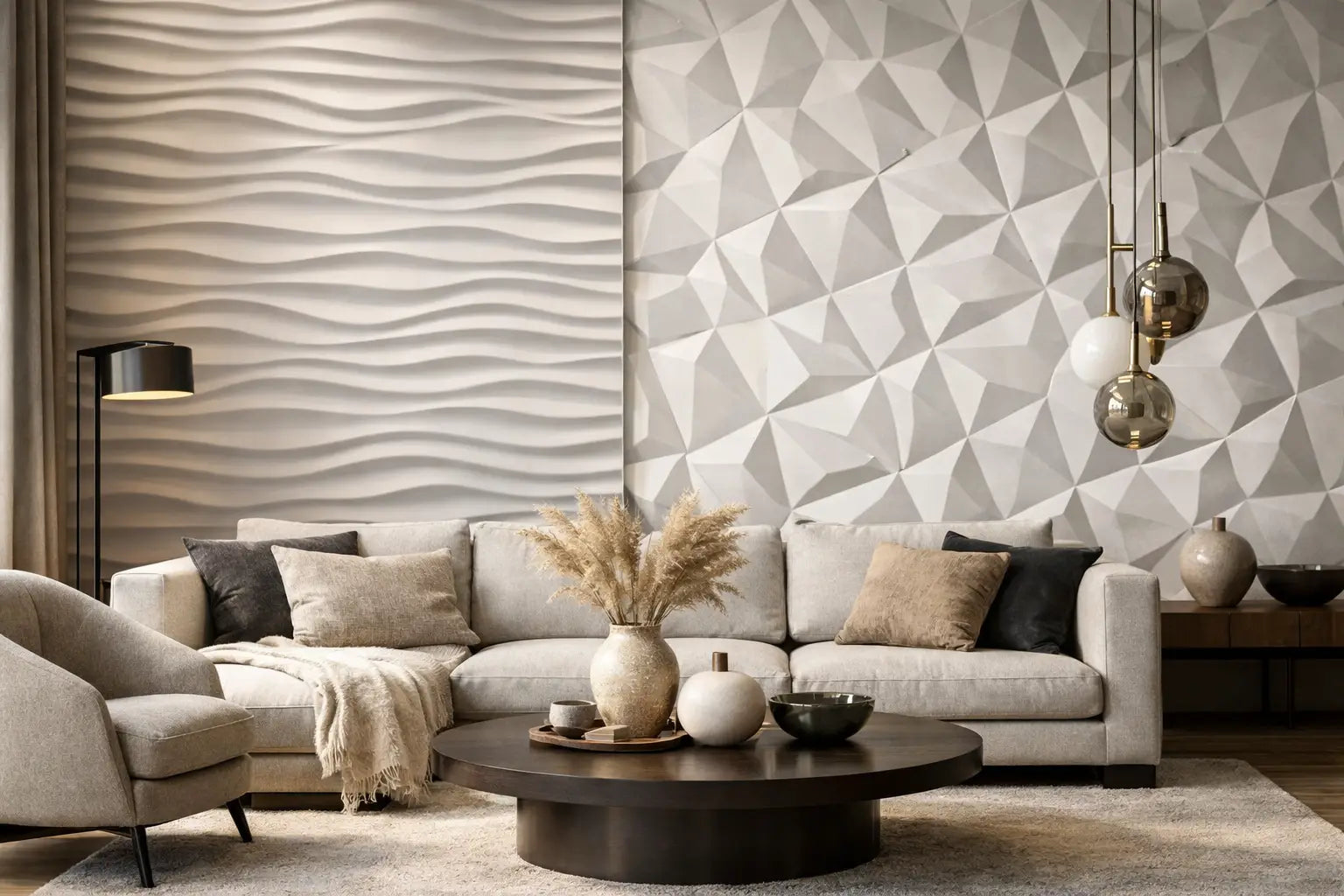
A living room can be well-furnished, bright, yet lack presence. Often, it's the wall that betrays this impression of an unfinished room. If you're wondering how to modernize a living room with texture, the answer isn't just in a new sofa or a trendier coffee table. It lies in visual depth, material, and how surfaces catch the light.
Texture immediately changes how a space is perceived. It adds rhythm to an overly smooth volume, brings an architectural dimension without major work, and creates that high-end finish feel that flat walls don't always offer. In a contemporary interior, it's not about overdoing it. The goal is to structure the living room precisely, so it appears more refined, more current, and more vibrant.
Why texture so effectively modernizes a living room
A modern living room doesn't necessarily have to be so minimalist that it feels cold. The most successful interiors play on the balance between clean lines and a sense of comfort. Texture acts precisely at this point. It introduces an elegant visual tension, without multiplying decorative objects.
Where paint alone creates a uniform surface, a textured wall covering catches shadows and varies with the time of day. In the morning, it appears discreet. In the evening, under well-directed lighting, it becomes a central element of the decor. This evolving effect gives the living room lasting sophistication, far from a simple trend.
It's also a relevant solution when the room lacks architectural character. In many contemporary apartments or houses, the volumes are correct, but the walls remain neutral. Adding texture allows you to recreate a strong, almost custom-made wall presence, without undertaking heavy renovation.
How to modernize a living room with texture without overcrowding the room
The first mistake is wanting to put texture everywhere. A modern living room breathes. You therefore need to choose a strategic area, one that deserves to be highlighted. The wall behind the sofa is often the most obvious, as it naturally structures the perspective. The TV wall also works very well, provided the equipment is integrated cleanly and visually coherently.
In an open-plan living room, texture can also be used to delineate the living area without partitioning. This is particularly interesting in a room that combines living room, dining room, and kitchen. The textured wall then becomes an architectural anchor point, more subtle than a physical separation.
The right dosage depends on the size of the room, the ceiling height, and the natural light. In a small living room, it is better to favor a single wall treated with an elegant pattern and a light shade. In a large volume, it is possible to use more graphic or more sculpted panels, especially if the furnishings remain uncluttered.
What type of texture to choose for a contemporary look
Not all textures produce the same effect. To modernize a living room, geometric shapes remain a safe bet. They provide a clean, contemporary structure that is easy to integrate into various decors. They are particularly suitable for interiors that focus on precise lines, noble materials, and a sober palette.
Wavy patterns, on the other hand, introduce a more fluid sensation. They soften a very rectilinear space and create a more enveloping atmosphere. In a living room where wood, textiles, and warm tones already dominate, this type of texture allows for a modern aesthetic without rigidity.
3D plaster panels occupy a special place, as they combine aesthetics and functionality. Their surface can be painted to perfectly match the decorative project, their rendering is more architectural than a simple textured wallpaper, and they add a real sense of material. Some models even allow for integrated lighting, which further enhances the depth effect.
The choice of design must interact with the furniture. If your living room already has a very prominent sofa, textured curtains, or a patterned rug, a more sober wall texture will often be more appropriate. Conversely, in a very minimalist space, a sculptural wall can become the centerpiece without unbalancing the whole.
Color matters as much as texture
Texture is not just about the pattern. Color determines how it will be perceived. For a chic and contemporary look, mineral tones are particularly effective. Off-white, greyish beige, sand, light taupe, or soft grey allow the texture to express itself subtly. Light then glides over the volumes instead of crushing them.
Deep hues can be very elegant, but they require more mastery. A dense green, a grey-blue, or a deep greige give a lot of character to a living room, especially if the lighting is well thought out. On the other hand, in a dark or small room, overly closed colors risk visually reducing the space.
The finish also matters. A matte or velvety appearance often highlights the sophistication of the texture better than an overly glossy paint. The rendering appears more premium, calmer, and above all, more timeless.
Lighting truly reveals the texture
A poorly lit textured wall loses much of its impact. To achieve a modern result, light must accompany the volumes. This is where the project takes on a truly decorative dimension.
Grazing light creates fine shadows that highlight the design of the panel or material. Directed wall lights, integrated LED strips, or indirect ceiling lighting can be enough to completely transform the perception of the living room. In the evening, the space gains depth and atmosphere.
However, overdoing it should be avoided. If the texture is already expressive, it is better to choose warm and discreet lighting rather than an overly demonstrative device. True luxury is often that which seems obvious, never forced.
Combining texture, furniture, and materials
Modernizing a living room with texture does not mean redoing everything. This is precisely the advantage of this approach. A textured wall can enhance existing furniture, provided a few elements are adjusted around it.
Natural materials particularly reinforce the texture effect. A textured fabric sofa, a dark wood table, a boucle rug, or a few matte black metal details create a coherent and contemporary ensemble. The wall then becomes an architectural base, not just an applied decoration.
If your furniture is very contemporary, with low, clean lines, a geometric texture will emphasize this modernity. If your living room is more classic, a more organic or softer pattern will allow the room to evolve without abrupt rupture. This is often the point that makes the difference between a successful renovation and a result that seems tacked on.
Practical advantages not to be overlooked
Wall texture is not only for aesthetic purposes. In a living room, certain solutions also provide better user comfort. Decorative plaster panels, for example, can help improve the acoustic and thermal sensation of the room. In a living space where you entertain, watch television, or where volumes resonate a little too much, this is a tangible benefit.
The ability to paint the surfaces is another decisive advantage. It allows the wall to be adapted over time, without replacing the entire covering. For individuals as well as professionals, this flexibility is precious. It allows for an ambitious project today, without confining the living room to a fixed style tomorrow.
Installation also matters. A well-designed product, conceived for clean and easy installation, makes taking action much simpler. This is one of the reasons why solutions like those offered by EFFET MARBELLA appeal to both decoration enthusiasts and demanding project specifiers.
What to avoid to maintain an elegant living room
Texture works best when treated as an architectural element, not as an isolated decorative effect. Therefore, avoid accumulations of frames, shelves, or objects that interrupt the reading of the pattern. On a textured wall, the fewer interruptions there are, the more noble the effect.
It is also necessary to be wary of overly harsh contrasts between the wall and the rest of the room. A very graphic covering combined with too many strong colors or visually heavy furniture can quickly strain the eye. Modernity does not come from excess. It comes from mastery.
Finally, it's best to think about the texture with the overall volume of the living room. The height of the skirting boards, the presence of a suspended TV cabinet, the shape of the sofa, or the direction of natural light all have an impact on the final result. A beautiful material reaches its full potential when it is part of an overall composition.
A modern living room is not only distinguished by what it contains, but by how its surfaces interact with each other. When the wall gains depth, the entire room changes status. It becomes more architectural, warmer, and more memorable. If you are looking for a visible, elegant, and lasting transformation, texture is often the most appropriate gesture.


