
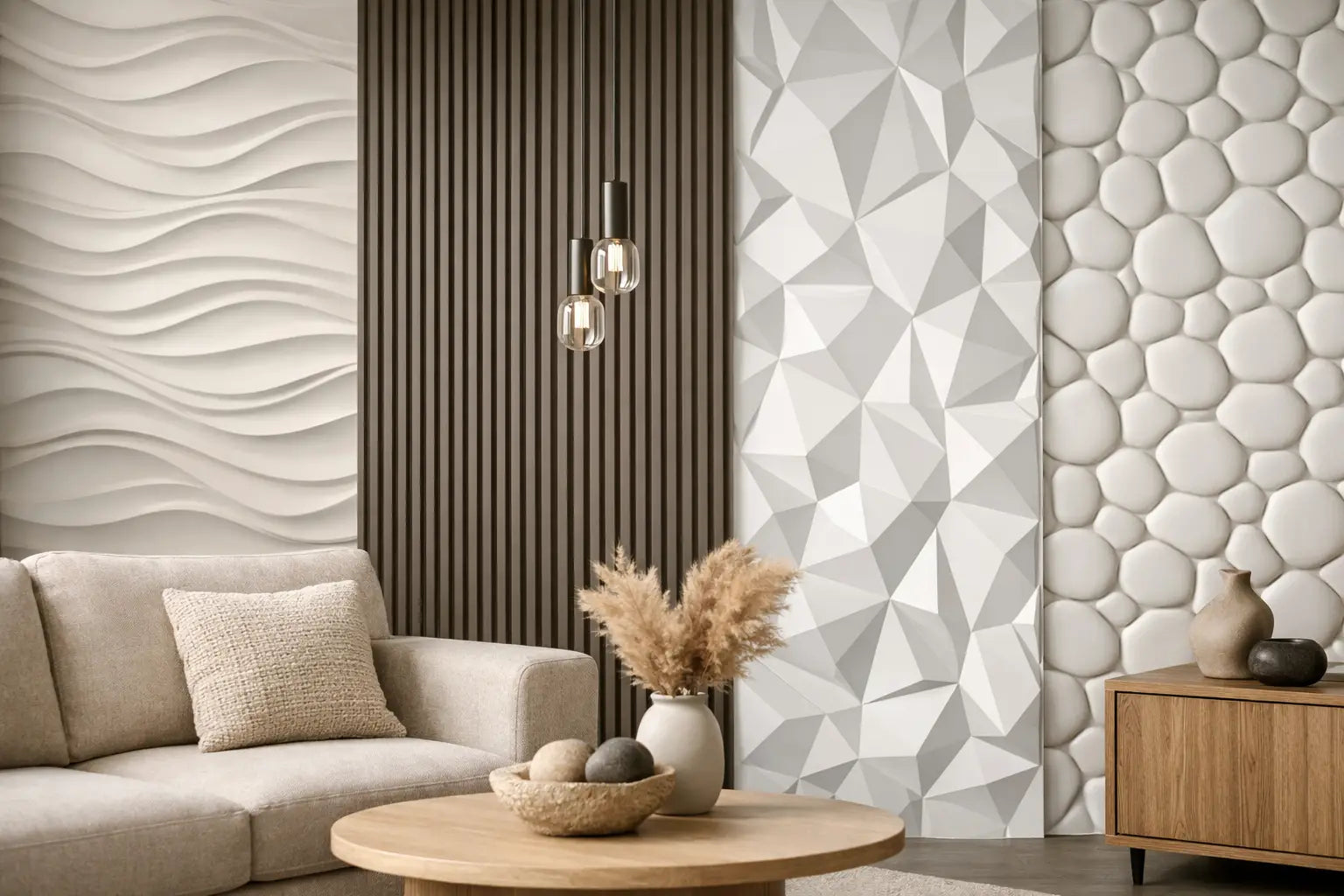
A smooth wall can be clean, neat, perfectly painted - and yet leave a room without character. This is precisely why modern interior wall panel trends are so appealing today. They are not merely a decorative effect. They respond to a very current desire: to give more presence, texture, and character to the interior, without overwhelming the space.
In residential projects as well as more ambitious developments, the contemporary wall panel is establishing itself as a full-fledged architectural solution. It dresses, structures, softens acoustics, plays with light, and immediately transforms the perception of a room. But not all trends are equal. Some are spectacular in photos but quickly become tiring in daily life. Others, more controlled, establish lasting elegance.
The Modern Interior Wall Panel Trends That Really Matter
The clearest trend is not a specific color or pattern. It is the return of the wall as a design element, and not just a surface to be finished. The most successful interiors no longer rely solely on furniture to create visual impact. The wall becomes a volume, sometimes discreet, sometimes assertive, but always conceived as a component of comfort and style.
This evolution explains the success of 3D plaster panels in contemporary settings. Their strength lies in a rare balance: they create a sculptural presence without falling into decorative excess, especially when chosen in clean geometric lines, fluid undulations, or subtle enough reliefs to remain timeless.
Controlled Relief Replaces Excessive Ornamentation
For a time, many modern interiors sought absolute purity. The result: elegant spaces, certainly, but sometimes cold. The current trend corrects this with more visual material. Relief is back, but in a more architectural than decorative version.
Geometric panels perfectly illustrate this direction. They give rhythm to walls, guide the eye, and enhance the contemporary character of a living room, an entrance, or a master suite. Their advantage is clear: they introduce detail without multiplying objects. In a room already loaded with furniture or finishes, a too complex pattern can, however, create a feeling of clutter. Everything therefore depends on the scale of the relief and the sobriety of the rest of the arrangement.
Organic Forms Soften Contemporary Spaces
At the other end of the spectrum, panels with undulating lines or more fluid shapes respond to another strong expectation: to make modern interiors more welcoming. In rooms dominated by straight lines, minimalist joinery, and neutral tones, a wave pattern brings immediate softness.
This approach works particularly well in bedrooms, reading nooks, reception areas, or living rooms where a cozy atmosphere is desired. It's a lasting trend because it doesn't rely on a flashy fashion effect. Instead, it plays on a soothing visual sensation. Again, context matters. In a very small space, a too pronounced relief can visually reduce the desired lightness. A finer pattern will often be more appropriate.
Light Becomes an Integral Part of the Wall
Among the most striking evolutions of modern interior wall panel trends, integrated lighting truly changes the function of wall coverings. The wall is no longer just seen. It illuminates, highlights, and stages.
Panels designed to accommodate LED strips respond to a very contemporary demand: to create atmosphere without multiplying decorative light fixtures. The result can be sophisticated, almost hotel-like, while remaining very refined. In a hallway, a headboard, a TV wall, or a reception area, this type of panel brings a visual depth difficult to achieve otherwise.
However, a certain restraint must be maintained. Integrated light is very effective when it serves the relief. If it becomes too powerful or too present, it risks transforming an elegant wall into a dated spectacular effect. Success comes from the dosage, the light temperature, and the coherence with the rest of the project.
Monochrome Prevails Over Overly Decorative Contrasts
Color follows the same logic of sophistication. High-end interiors move away from overly stark oppositions between wall, relief, and furniture. Panels are increasingly painted in tones close to the environment: off-white, greige, sand, light taupe, mineral gray, sometimes deep charcoal for a more theatrical effect.
This monochrome choice has a real interest. It lets shadow and light speak rather than just the pattern. The relief is naturally read throughout the day, with a more subtle elegance than a panel accentuated by a highly contrasting hue.
This does not mean that strong color disappears. A panel wall painted in muted terracotta, grayish olive green, or very matte blue can be remarkable. But this treatment requires an overall vision. The more pronounced the color, the more controlled the relief must be to avoid visual overload.
Functionality Is No Longer Secondary
One of the reasons why the contemporary wall panel is gaining ground is simple: it doesn't just respond to an aesthetic desire. Buyers today want materials that also improve daily comfort.
In this context, 3D plaster panels have a special place. They offer a highly decorative finish while contributing to acoustic improvement and a feeling of thermal comfort. For an apartment with sound reverberation, a living room with hard surfaces, or a bedroom that one wants to make cozier, this aspect really matters. Decoration is no longer separate from use.
This is also what distinguishes solid trends from fleeting ones. A spectacular but fragile wall, difficult to maintain or complicated to integrate, often ends up being disappointing. Conversely, a paintable, durable, and relatively simple decorative solution remains relevant long after the novelty effect wears off.
Where These Trends Work Best
Not all rooms require the same level of impact. In a living room, a statement wall behind the sofa or TV unit works very well, as it immediately structures the room. In a bedroom, the panel behind the headboard creates a chic architectural effect, with a more pronounced cocooning feel.
The entrance is often underutilized, yet it lends itself perfectly to this type of transformation. A few well-treated square meters can give a strong identity from the very first glance. In professional or high-end rental projects, panels also make it possible to create a visual signature without resorting to heavy work.
The point of attention always remains the same: a strong wall needs visual space. If every surface in the room tries to attract the eye, elegance disappears. A single wall treated with conviction is often better than an accumulation of reliefs.
How to Choose a Trend That Will Age Well
Following modern interior wall panel trends does not mean copying a trendy image seen on social networks. A successful interior lasts over time because it is based on sound choices, not just effects.
The first question to ask concerns the wall's place in the overall scheme. Should it become the main focal point, or subtly complement the furniture and lighting? A more assertive geometric form will suit a graphic and contemporary project. An undulating or softer line will often be preferable in a calm and sensory environment.
The second question concerns natural light. A subtle relief can look superb in a well-exposed room and lose its readability in a dark space. Conversely, a very deep relief can become too present if the grazing light is strong all day long.
Finally, one must think about durability. The best choices are often those that allow for room for evolution. Paintable panels allow for changes in ambiance without replacing the entire covering. This is an important asset for both individuals and professionals.
A More Mature, More Architectural Trend
What makes the current market particularly interesting is its maturity. The wall panel is no longer perceived as a decorative fantasy reserved for a few demonstrative spaces. It is becoming a precise tool for creating character, enhancing a volume, and improving the perceived quality of an interior.
For a brand like EFFET MARBELLA, this evolution confirms a very clear market expectation: customers are looking for surfaces that are both beautiful, intelligent, and easy to integrate into an overall vision. Elegance is no longer enough if it is not accompanied by usability. And practicality alone does not convince without visual emotion.
The most successful walls today do not seek to impress at all costs. They establish a presence. They give the room a depth that paint alone cannot offer. If you are considering transforming an interior, perhaps start by looking at your walls differently. It is often there that the project finally takes on its full dimension.


