
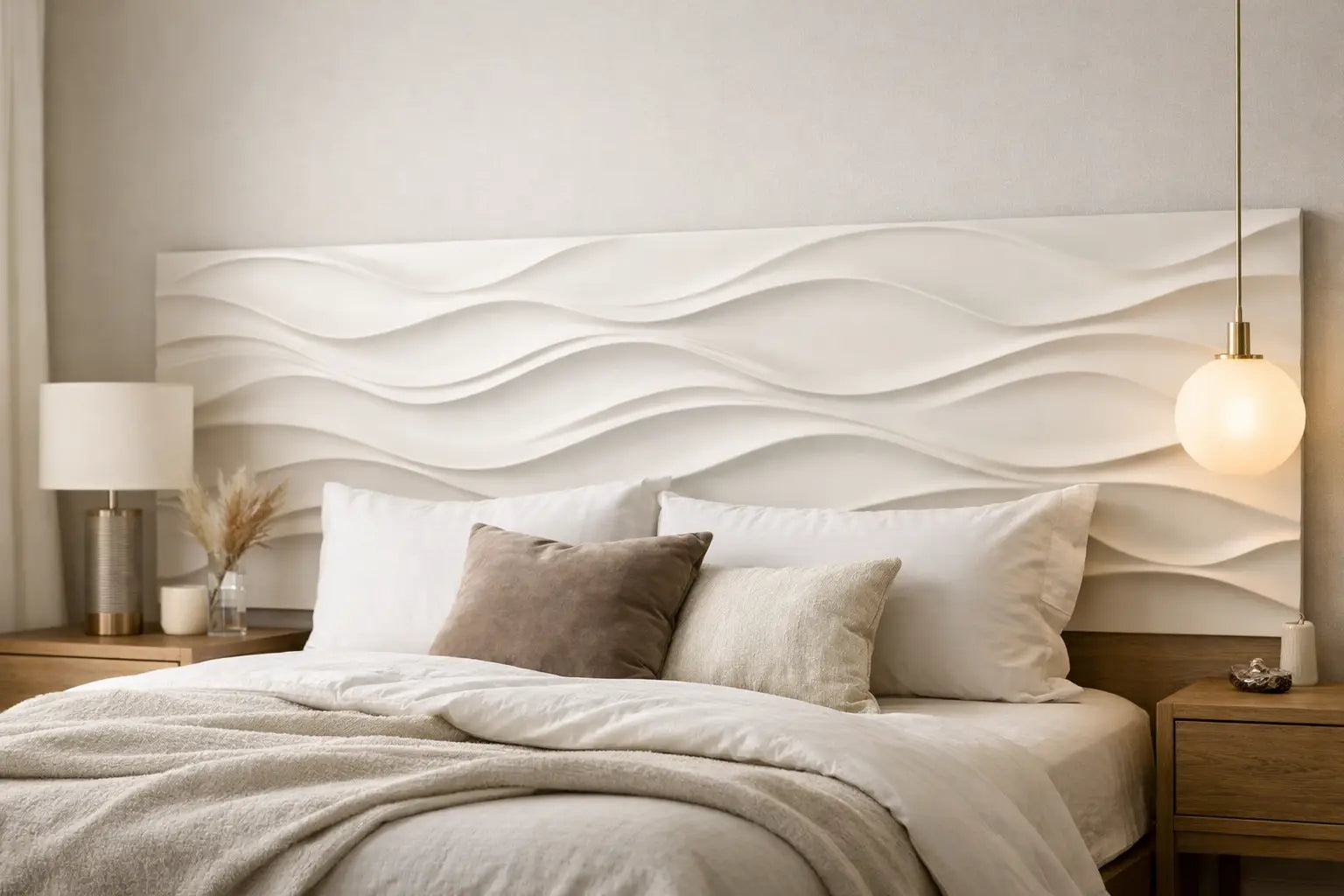
A headboard shouldn't be a simple addition placed against the wall. It can structure the entire room, give rhythm to the space, and create a sense of comfort at first glance. This is precisely where the wave wall panel headboard makes perfect sense. More architectural than a classic headboard, it transforms a flat wall into a decorative composition with subtle, contemporary, and durable relief.
Why choose a wave wall panel as a headboard
In a bedroom, the wall behind the bed naturally draws attention. If it remains smooth and without texture, the overall look may be acceptable but rarely memorable. The wave pattern changes this visual perception. It brings movement without being excessive, making it a particularly suitable option for those seeking a refined atmosphere rather than an overly demonstrative decorative effect.
The great advantage of the wave panel lies in its balance. It is more expressive than a plain paint, but more timeless than a very graphic wallpaper. In a master bedroom, it creates a soft, sculptural presence. In a hotel suite, a high-end apartment, or a carefully designed rental project, it immediately gives an impression of a more sophisticated finish.
This choice is not only aesthetic. A well-designed 3D panel also adds a cocooning sensation. The relief softens the perception of the wall, slightly improves acoustic comfort, and contributes to a more hushed atmosphere. For a room dedicated to rest, this is a detail that truly matters.
The visual effect of a wave wall panel headboard
The wave pattern works because it evokes movement without clutter. Where some geometries assert a very strict style, the wave brings a more fluid line. It is therefore suitable for various decorative universes, from sleek contemporary to hotel chic, as well as more organic interiors where materials play a central role.
A wave wall panel headboard can visually enlarge the wall if the design is well-proportioned. On a narrow wall section, it draws the eye upwards and gives stature to the bed. On a wider wall, it can, on the contrary, create an elegant breathing space, especially when it is installed across the entire width of the bed with a measured overhang on each side.
Light plays a key role. The relief captures shadows and reveals the design throughout the day. This is what makes the difference between a simply pretty decoration and a living decoration. With side sconces, indirect lighting, or well-placed pendant lights, the panel takes on a more sophisticated, almost custom-made dimension.
What height and width to plan for
This is often the question that determines the final result. A panel that is too small gives the impression of a hesitant decorative addition. A panel that is too invasive can overwhelm the room, especially in a modestly sized bedroom.
For the width, it is generally wise to slightly exceed that of the bed. This better frames the composition and creates a more luxurious visual foundation. For a 160 cm bed, a width of 180 to 220 cm often works very well. If the room has a distinct architectural character, you can even cover the entire wall behind the bed.
For the height, everything depends on the desired style. A half-height installation gives a more classic and reassuring look. A more generous height, up to the ceiling or almost, produces a more spectacular decorative effect. In a contemporary apartment or a design project, this second option is often the strongest, provided a sober palette is maintained.
The right color and material associations
The wave panel has the advantage of being paintable, which opens up a wide range of customization options. In a bedroom, mineral and enveloping shades remain the most convincing. Off-whites, warm beiges, greiges, sands, and certain soft grays subtly highlight the relief without tiring the eye.
A dark tone can also be superb, but it requires more expertise. An intense taupe, a deep green, or a grayish blue create a precious, almost hotel-like atmosphere. However, in a dimly lit room, it is better to avoid too dense a color on a large textured wall, unless the desired effect is very deliberate.
In terms of materials, the wave wall panel pairs particularly well with wood, washed linen, matte velvet, brushed brass, and thick textiles. This contrast between wall relief and tactile materials reinforces the impression of comfort. If everything around is smooth and shiny, the panel can lose some of its warmth.
In which bedroom styles it works best
The wave pattern integrates easily, but it expresses its full potential in certain decors. In a contemporary bedroom, it brings a visual signature without overwhelming the ensemble. With a low bed, discreet nightstands, and a neutral palette, the result is clean, high-end, and durable.
In a more sophisticated setting, it advantageously replaces a tufted headboard when something more architectural is desired. The relief then creates an elegant staging, especially with wall lights and generous bedding.
It also works very well in premium real estate projects or guest rooms that need to be enhanced quickly. This is an often underestimated point. A worked wall behind the bed immediately changes the perceived quality of a room, without requiring heavy renovation.
Installation and practical aspects not to overlook
The appeal of a decorative panel is not just its appearance. It must also be consistent with the reality of the construction site. 3D plaster wall panels attract precisely because of this dual advantage. They offer a sculptural rendering while remaining suitable for relatively simple implementation by a craftsman, decorator, or careful individual.
The substrate must be clean, dry, and stable. Wall preparation directly influences the quality of the final result. On an uneven surface, joints and pattern alignment can lose precision. Conversely, careful installation gives an integrated, almost architectural look, much more premium than an added headboard.
Peripheral details also need to be considered. Sockets, switches, sconces, and suspended nightstands must be anticipated before installation. This is particularly true if a clean look is desired. When the panel is planned from the outset, the room seems designed around it. When it is added without global consideration, the result is often less fluid.
The wave wall panel headboard in a high-end project
For a refined interior, the difference is rarely about the quantity of decoration. It's about the quality of lines, volumes, and finishes. A wave wall panel headboard fits exactly this logic. It doesn't need to be extravagant to create a strong effect. Its relief is enough to give depth and value to the main wall of the bedroom.
In a more premium approach, it can even become the starting point of the entire decorative project. First, the wall design is chosen, then a coherent palette, precise lighting, generous textiles, and a few well-calibrated furniture elements are built around it. The result appears more coherent, calmer, and often more luxurious than an accumulation of decorative objects.
It is also a relevant choice for those who want to invest in a sustainable decor. Trends change, but sober and well-proportioned reliefs withstand time much better than overly marked patterns. This is precisely what makes this type of solution so convincing in a bedroom.
What to avoid to maintain an elegant result
The main risk is wanting to do too much. A wave wall already has a strong presence. If you also add very elaborate bedding, massive nightstands, several strong colors, and overly decorative lighting, the overall effect can lose sophistication.
The scale of the pattern relative to the room should also be monitored. In a small bedroom, too imposing a design can create a cramped effect. In a large room, too discreet a relief can go unnoticed. The ideal remains a balanced composition, designed with the proportions of the bed, the ceiling height, and the light intensity of the room.
Finally, the paint should be chosen carefully. A finish that is too glossy sometimes highlights the relief harshly. A matte or slightly velvety finish is generally better for preserving the elegance of the design.
At EFFET MARBELLA, this approach to decorative walls is part of a clear vision of contemporary interiors. Relief is not just an effect. It is an element of visual comfort, character, and lasting enhancement of the space.
If your bedroom lacks presence, there's no need to multiply artificial elements. Sometimes, all it takes is a well-designed wall behind the bed to shift the entire ambiance towards beauty.


