
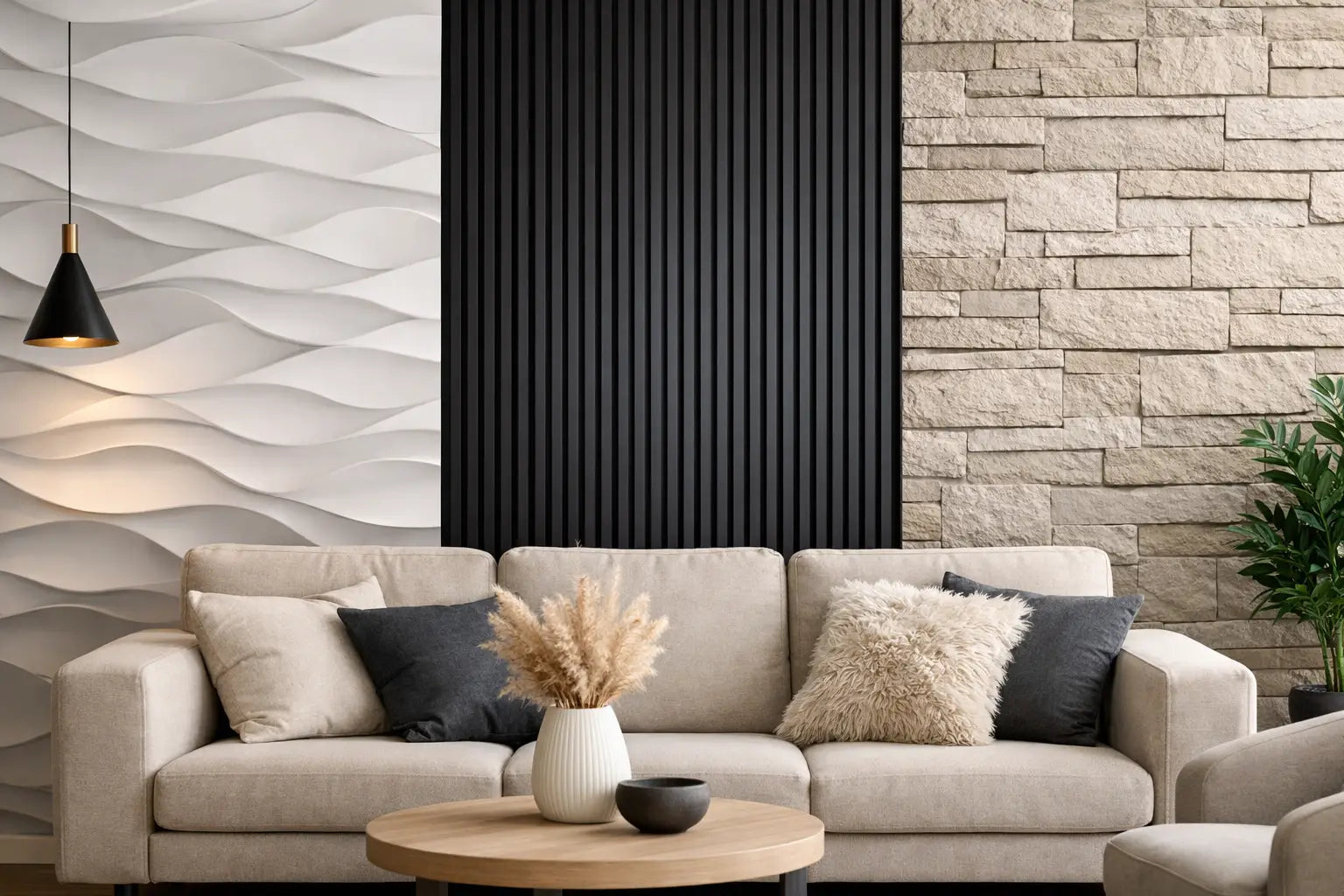
A living room can be perfectly furnished yet still feel incomplete. Often, it's not the sofa or the lighting that's missing, but the wall itself. The real question then becomes simple: which wall panel should you choose for the living room to add relief, structure the space, and create a more elegant atmosphere without overwhelming the room?
The right wall panel doesn't just decorate. It redefines volumes, captures light differently, and transforms a flat wall into an architectural element. In a living space, this effect is particularly important, as the living room combines reception, comfort, and the visual identity of the interior.
Which wall panel for the living room, depending on the desired effect
The choice depends primarily on the desired outcome. Some living rooms need a strong focal point behind the sofa or TV cabinet. Others require a more subtle intervention, capable of adding texture without dominating the entire decor. This is where relief, pattern rhythm, and visual depth come into play.
If you're looking for a sharp, contemporary presence, geometric panels are often the most compelling. Their lines create a structured, precise, almost architectural rendering. They are very well suited for modern interiors, minimalist living rooms, or spaces that need a strong visual framework to avoid too smooth an appearance.
Conversely, panels with undulating shapes soften the ambiance. They bring movement, but with more fluidity. In a living room where you want to create a high-end comfort sensation, this type of relief works very well, especially with grazing light in the evening. The wall no longer just exists – it comes alive.
There are also models designed to integrate LED lighting. In a living room, this use can be particularly successful on an accent wall. The effect is more scenographic, more assertive, and suitable for those who want a highly elaborate interior. However, it should be used in moderation. In a room already cluttered with furniture, materials, or decorative objects, the whole can quickly seem too ostentatious.
The material changes everything in a living room
When considering which wall panel to install in a living room, the material should never be treated as a detail. It influences the visual rendering, the feel, the durability, and even the perception of comfort.
3D plaster wall panels hold a special place in carefully designed interiors. Their mineral finish brings a more refined presence than visually imitated solutions. The relief appears more distinct, denser, more credible. This is a particularly relevant choice if you want a living room that maintains an impression of quality over time, rather than a mere temporary decorative effect.
Another decisive advantage is that plaster can be painted. This freedom allows the panel to be adapted to the overall ambiance of the room, whether it is bright and soft or more contrasting. A deep matte white elegantly highlights the shadows of the relief. A warm beige brings a more enveloping feel. A deep gray or a mineral tone creates a more contemporary signature.
This material also offers functional benefits. In a living room, anything that slightly improves acoustic or thermal comfort matters more than one might think. A textured and well-chosen wall does not replace a complete technical treatment, but it can contribute to making the room more hushed, more pleasant on a daily basis.
How to choose the right pattern without overwhelming the room
The most beautiful wall panel can produce a bad result if it is not adapted to the proportions of the living room. The right choice therefore depends as much on the style of the panel as on the scale of the room.
In a small living room, it's best to avoid overly massive or busy patterns. A fine, regular, and luminous relief visually enlarges the space. It draws the eye without crushing the volumes. Light colors further enhance this effect, especially if the room receives little natural light.
In a large living room, you have more freedom. A distinctive pattern, on the contrary, can help fill the wall and avoid a sense of emptiness. On a long wall, a panel with a strong personality creates a true decorative breathing space. It gives a role to the wall and better balances large furniture pieces.
The context also matters. If your sofa, rug, and curtains already have a lot of texture or patterns, the wall panel should remain more restrained. If, on the contrary, the ensemble is sober, it can become the strong piece of the composition. Elegance rarely comes from accumulation. It comes from a clear hierarchy between elements.
Where to install a wall panel in the living room
The location is almost as important as the chosen model. In most cases, the wall behind the sofa is the most natural option. It immediately structures the reception area and creates a coherent visual backdrop for all the furniture.
The TV wall is another very effective solution. The wall panel can frame the screen and give more presence to an area that often seems technical or cold. The relief brings substance where electronic equipment tends to flatten the atmosphere.
In some projects, a single wall section is sufficient. This is often the best choice. Covering the entire room with relief can be spectacular, but not always appropriate. A living room needs balance, calm areas, and visual breathing space. The wall panel is more elegant when it highlights the architecture instead of saturating it.
For large open volumes, it can also subtly delimit a living room area within a larger living space. Without compartmentalizing, it creates a clearer reading of functions and provides a custom-made feel.
Colors, light, and finish
A wall panel comes to life with light. It is light that reveals the hollows, edges, and depth of the pattern. Before choosing a shape, observe the room's exposure and existing light sources.
In a very bright living room, almost all reliefs work, as long as they remain consistent with the general style. Natural light will define the panel throughout the day. In a darker room, it's better to prioritize legible patterns and shades that capture light instead of absorbing it completely.
The paint finish plays a decisive role. A deep matte is generally the most sophisticated choice, as it enhances the relief without creating unwanted shine. A finish that is too satin can sometimes weaken the readability of the pattern, especially under direct lighting.
Neutral colors remain safe bets for a timeless living room. They adapt more easily to changes in furniture and decoration. This doesn't mean giving up bold shades. A grayish green, a dense taupe, or a softened terracotta can produce a very high-end result, provided the rest of the room remains controlled.
Installation and maintenance: what you really need to anticipate
A quality wall panel must look good once installed, but also be easy to integrate into a real project. This is essential for both individuals and professionals.
Ease of installation is very important, especially if you are renovating an already occupied living room. Systems designed for clear and methodical installation save time and achieve a cleaner finish. Substrate preparation remains crucial. A clean, stable, and properly prepared wall will always yield a more precise result, especially at the panel joints.
You also need to consider cuts, electrical outlets, corners, and the junction with skirting boards or the ceiling. These are the details that elevate a project to a truly premium finish. A beautiful panel poorly integrated immediately loses its impact.
In terms of maintenance, painted plaster panels are well suited for careful residential use. The main thing is to choose a finish adapted to the room and to keep the surface clean and dry. In a living room, this is generally easy to manage, which reinforces the appeal of this solution for a durable decor.
The right choice is one that transforms without tiring
Ultimately, choosing which wall panel to install in a living room comes down to finding the right level of expression. Too discreet, it goes unnoticed. Too present, it becomes tiresome more quickly. The best choice is often one that gives a clear identity to the room while allowing the living room to breathe.
For a contemporary and elegant interior, 3D plaster panels offer a rare balance between decorative presence, material refinement, and practical benefits. They enable a visible, durable, and perfectly customizable transformation through color, light, and placement. This is precisely what makes them such a compelling answer for a demanding residential project.
If you're still hesitating, start with a simple question: do you just want to dress a wall, or give the living room a true architectural dimension? The answer will naturally guide your choice towards a panel that doesn't fill the space, but elevates it.


