
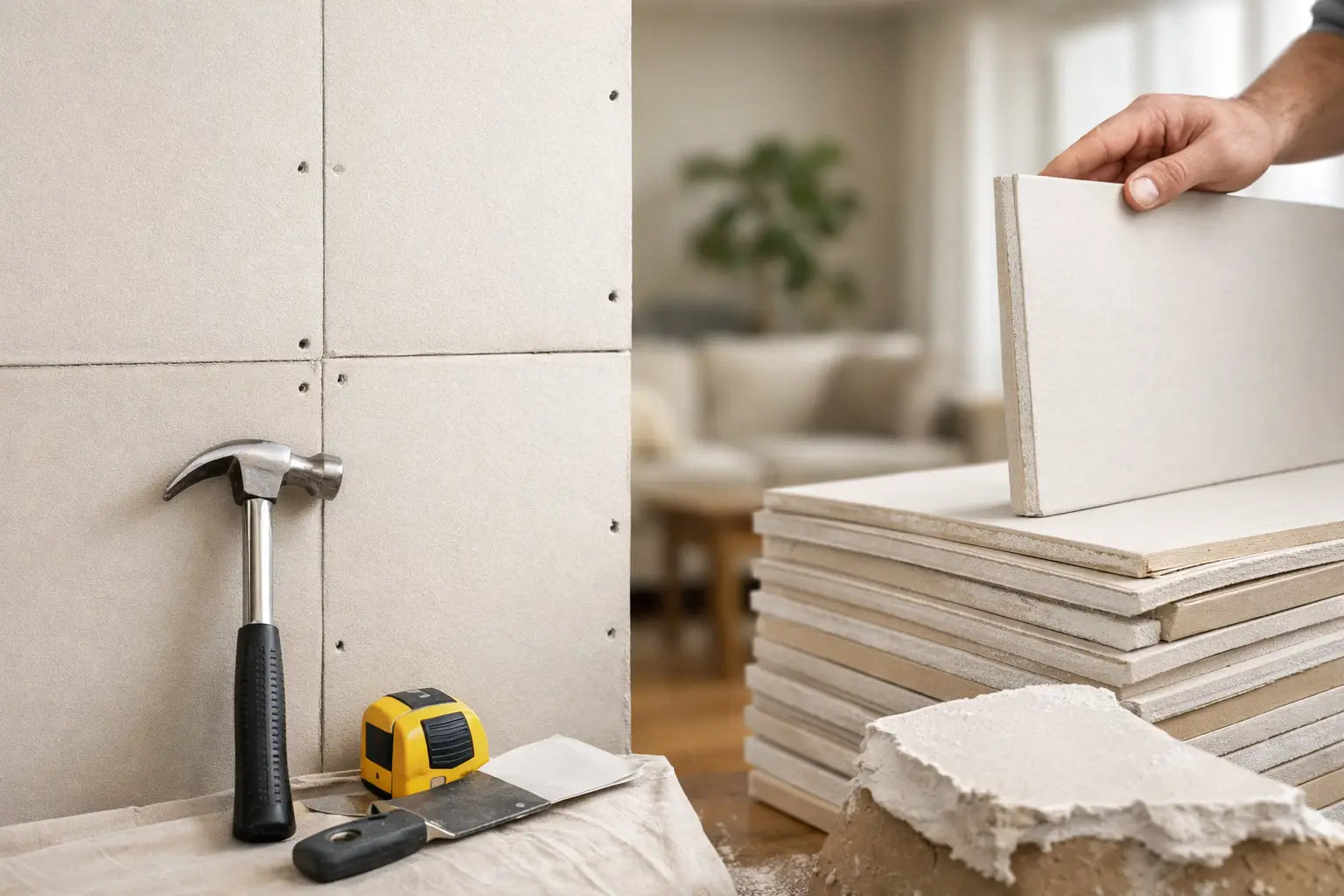
A decorative wall should not only look good on the day it is installed. It must retain its relief, sharpness, and visual presence over the years. This is where the question often arises for both individuals and professionals: are gypsum wall panels durable? In French, the real answer is simpler – yes, gypsum wall panels can be durable, provided they are used in the right place and installed correctly.
For a residential interior, a renovated apartment, a sculptural headboard, or a more architectural reception wall, gypsum offers a highly sought-after balance between visual refinement and real performance. It is not a material designed for the same constraints as industrial cladding or exterior siding. However, in a well-chosen interior setting, it holds up remarkably well over time.
Are gypsum wall panels durable in real-world use?
The durability of a gypsum wall panel is not solely judged by its hardness. It depends on several criteria: its dimensional stability, its resistance to normal wear and tear, its ability to remain aesthetic after painting, and its behavior over a long period in a living space.
On these points, gypsum performs very well. Once installed on a suitable substrate, it retains its shape, does not deform easily, and offers a stable mineral surface. This is one of the reasons why it is so popular in high-end decorative projects. The relief remains precise, the material maintains a beautiful presence, and the painted finish can remain elegant for many years.
Another often underestimated advantage: gypsum does not have the hollow or lightweight appearance of some more economical decorative materials. It gives an impression of material, depth, and architectural finish. For an interior that seeks to express lasting elegance rather than a passing trend, this is a strong point.
What makes gypsum durable
Gypsum is a mineral material valued for its density and stability. In the context of decorative 3D panels, this translates into good shape retention and a crisp finish, even on more graphic or wavy patterns. The edges, hollows, and volumes remain legible over time, which is essential when choosing a textured wall for its visual impact.
Its surface is also paint-compatible, which extends its aesthetic lifespan. A well-prepared and well-painted panel can be refreshed without losing its character. This is important for owners who want to evolve a room without replacing all the wall covering.
Its contribution to interior comfort should also be emphasized. Gypsum panels can contribute to the acoustic insulation and thermal sensation of a space. This is not the same as complete structural insulation, of course, but in a bedroom, living room, or reception area, this contribution to comfort also participates in the perceived durability of the product. A wall that remains pleasant to live with has more value over time.
Durability also depends on location
This is where the answer becomes more nuanced. Yes, gypsum wall panels are durable, but not everywhere and not under all conditions.
In a living room, bedroom, tidy hallway, office, staircase, or TV wall, they are perfectly in place. These areas benefit from relatively controlled indoor use, with little direct exposure to water and a moderate risk of impact. In this context, gypsum can last a long time while retaining its elegance.
However, in very humid spaces or those subject to frequent impacts, more caution is needed. A poorly ventilated bathroom, a high-traffic area with constantly moved furniture, or a heavily used commercial space require a more precise analysis. Gypsum is not fragile in the decorative sense of the term, but it is not a material designed to withstand repeated aggressions without precautions.
It is the type of product that performs best in well-designed interiors, where aesthetics and ambient quality are as important as function.
Resistance to impact, humidity, and time
The question of impact resistance comes up often. A gypsum panel withstands the normal stresses of an interior well, but it can be marked by a direct hit, especially on a prominent edge or a pronounced relief. This is the logical downside of a sculptural panel: the more character the design has, the more certain areas deserve to be protected from direct impacts.
Regarding humidity, everything depends on the level of exposure. A dry or properly ventilated room generally does not pose a problem. However, regular exposure to water, persistent condensation, or infiltration is not ideal. Gypsum likes controlled indoor environments.
Over time, its true strength remains aesthetic stability. Unlike some coverings that visually peel, yellow, or lose their sharpness, a well-installed gypsum panel maintains a very contemporary look. Its design is not based on a simple print or a surface effect, but on a real relief. This is what gives it that sense of permanence.
Installation and finish: two decisive elements
A beautiful material poorly installed quickly appears less durable than it actually is. For gypsum wall panels, the quality of the installation makes a big difference.
The substrate must be clean, stable, and suitable. The alignment of the panels, the treatment of the joints, and the quality of the final paint directly influence the appearance, but also the perception of solidity. When the joints are carefully finished, the wall appears almost monolithic. The whole gains in elegance and visual appeal.
The finish also plays an important role. A well-chosen paint helps protect the surface and facilitates routine maintenance. In a premium decorative project, it is often these details that make the difference between a simply decorated wall and a truly accomplished wall.
For individuals who want a smooth installation, as well as for professionals who are looking for a clean result right from the site delivery, it is best to consider the panels as a decorative architectural element, not as a simple quick covering.
Comparison with other wall solutions
Compared to PVC panels, gypsum generally appears nobler, denser, and more architectural. PVC can be practical in certain contexts, especially if the absolute priority is humidity or budget, but it rarely offers the same visual depth or the same material feel.
Compared to wood or decorative battens, gypsum offers a different aesthetic. Wood brings warmth, while gypsum allows for more sculpted, graphic, and often more contemporary forms. In terms of durability, everything then depends on the environment, the desired style, and the expected level of maintenance.
Compared to a simple painted wall, the gypsum panel requires a more thoughtful investment, but it radically transforms the perception of space. It adds relief, shadow, light, and a lasting visual signature. For many interiors, it is precisely this decorative value that justifies the choice.
For which projects is it a good choice?
Gypsum panels are particularly well suited for projects where the wall needs to become a character element. A minimalist living room, a sophisticated bedroom, a more theatrical entrance, a reception area, or a premium residential project immediately gain presence with a well-chosen relief.
They are also relevant for interior design professionals who want to combine visual effect, aesthetic coherence, and ease of personalization through paint. At EFFET MARBELLA, this logic is part of a clear approach: to offer decorative panels that elevate the interior while being designed for real use.
The best choice often remains the one that takes into account the room, lifestyle, and level of exposure of the wall. A highly textured panel behind a sofa or a headboard will not have the same constraints as a wall in a daily traffic area.
So, should you choose gypsum wall panels?
If your goal is to achieve an elegant, durable, and visually richer interior finish than a flat wall, the answer is often yes. Gypsum is not a universal material for all situations, but in the right context, it offers great longevity and a rendering that transcends trends with confidence.
You just need to approach it with the right perspective: as a premium decorative covering, designed to magnify interior spaces and last in a suitable environment. When the design, installation, and location are well thought out, the wall doesn't just dress the room – it gives it a real signature.


