
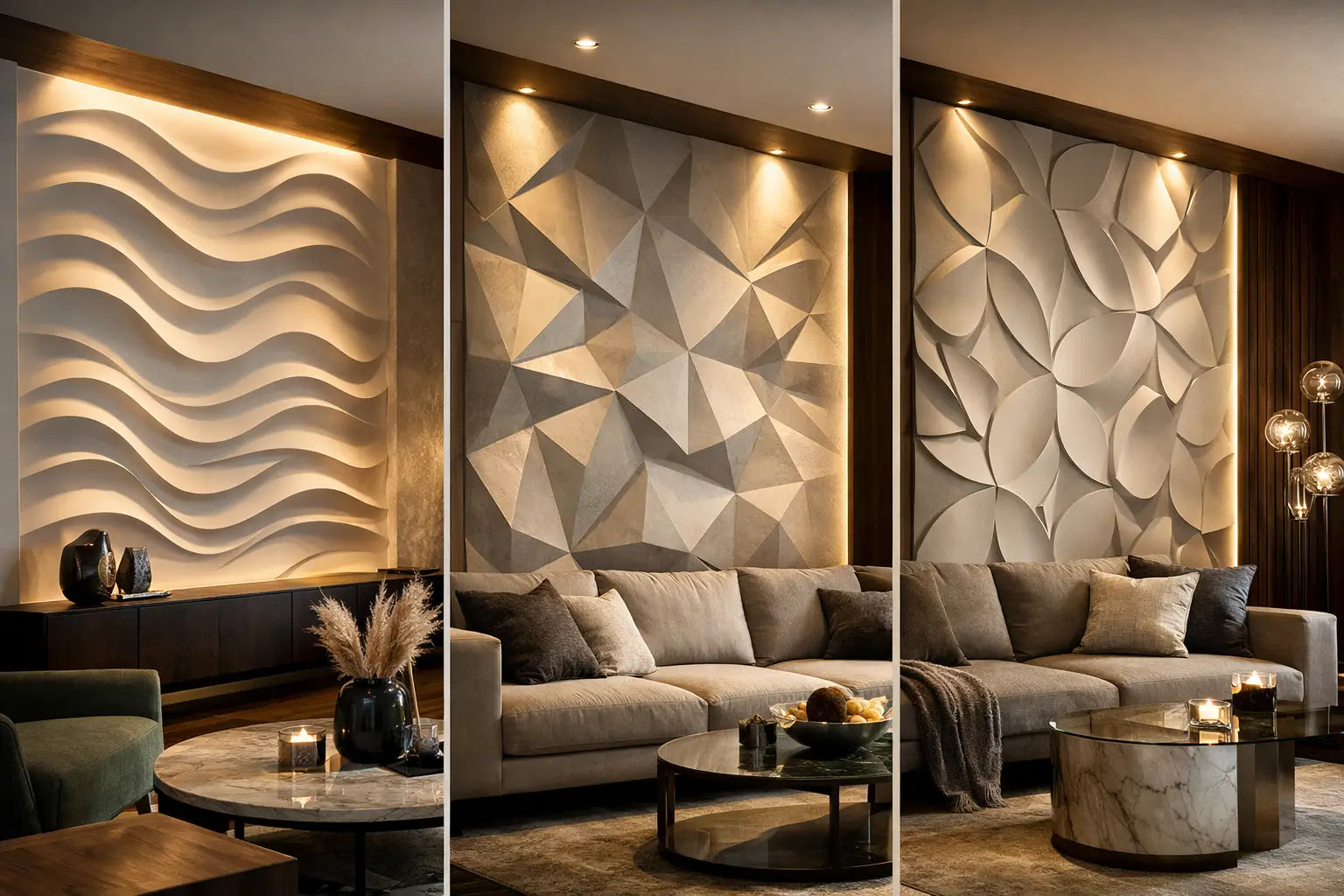
A well-designed accent wall immediately changes the perception of a room. Today, LED feature wall design trends are no longer limited to adding simple backlighting. They define volume, structure space, and give light an architectural role, just like material, color, and texture.
For contemporary interiors, this evolution is particularly interesting. An overly sleek living room, a characterless entryway, or a bedroom lacking depth can gain presence without resorting to excessive decoration. The wall becomes a complete composition, where 3D texture and light work together to create a more refined atmosphere.
Why LED feature wall design trends are gaining so much traction
This success is no passing fad. Homeowners and professionals alike are looking for solutions that offer a strong visual impact while remaining clean, controlled, and compatible with daily use. This is precisely where decorative walls with integrated lighting stand out.
The first reason is simple: they bring a sense of interior architecture, even in standard volumes. A 3D wall covering combined with a well-placed light line adds rhythm to an otherwise flat surface. The second reason relates to comfort. Indirect light softens the ambiance, enhances materials, and avoids the harshness of overly frontal central lighting.
There's also a more practical logic. When lighting is designed from the wall's conception, the result appears more high-end than the late addition of decorative luminaires. The effect is cleaner, more coherent, and often more timeless.
The trends defining the current LED wall
The most successful projects have one thing in common: they seek less immediate spectacular effect and more balance between relief, light, and proportion. This is what distinguishes an elegant realization from a quickly dated decor.
Subtly lit 3D relief
The strongest trend is to let the light reveal the pattern rather than highlight itself. On a geometric, ribbed, or corrugated panel, the LED acts as a shadow revealer. It emphasizes edges, accentuates hollows, and adds depth without saturating the space.
In this type of composition, sobriety matters. Too cold a light temperature can harden the relief. Conversely, a warm or slightly neutral light creates a more sophisticated reading of volumes. The result is particularly convincing in a living room, behind a headboard, or on a circulation wall that one wants to make more architectural.
Vertical lines to lengthen space
Vertical light lines respond to a very current demand: to make interiors appear taller and more structured. They work very well with repetitive pattern 3D panels, especially when the composition remains symmetrical or clearly rhythmic.
This approach is suitable for narrow rooms, entryways, or reception areas. It gives an impression of height and reinforces the contemporary character of the place. However, in a room already heavily furnished or finished, too much verticality can make the whole more rigid. The effect therefore depends on the context.
Horizontal compositions for a calmer ambiance
Conversely, horizontal LED lines create a calmer reading. They visually widen the wall and complement spaces designed for comfort, such as a TV corner, a bedroom, or a living room with a minimalist spirit.
They are particularly effective when the furniture is low and one wishes to create a more enveloping ambiance. The pitfall would be to place them without connection to the room's proportions. A line too high or poorly centered can break the visual balance instead of reinforcing it.
LED feature wall design trends and materials: what really works
Not all surfaces react to light in the same way. This is a decisive point, often underestimated when choosing.
3D plaster or gypsum finishes have an obvious advantage: their surface subtly captures light. Shadows remain soft, the rendering is more architectural, and the material retains an elegant presence, even when off. This is a major difference compared to shiny or overly smooth surfaces, which can produce more aggressive reflections.
Another interesting point: a painted decorative panel offers great aesthetic freedom. Matte white for a pure reading of the relief, sand tone for a warm ambiance, deep gray for a more theatrical rendering – each choice modifies how the LED diffuses. One must simply keep in mind that a dark shade absorbs more light. The effect will be more intimate, but less bright.
The return of natural palettes
The most current LED walls move away from overly demonstrative colored effects. Off-whites, mineral beiges, greiges, and stone nuances dominate, as they let the texture speak. This direction responds to a desire for visual durability. We want an interior that remains elegant over time, not a trendy effect that tires after a few months.
This does not mean that color is excluded. A deep green, a muted terracotta, or a warm taupe can work very well, especially in high-end residential projects. But the light must remain controlled. When the wall color and LED intensity compete for attention, the result loses finesse.
Where these trends are most relevant
The best decorative wall is not necessarily the largest. It is the one that is placed in the right place and that dialogues with the function of the room.
In the living room, the TV wall remains a strong choice. It allows framing the main space and creating an elegant visual backdrop, even when the screen is off. Here, indirect light is particularly useful, as it softens the contrast in the evening and adds more depth to the composition.
In the bedroom, the headboard enlarged by 3D panels and integrated LEDs creates the impression of a private hotel. The desired effect is not demonstration, but calm. Too many light lines would detract from this feeling. A simple, centered, and well-proportioned composition often produces the most beautiful result.
In an entryway or hallway, the LED wall can transform a passage into a decorative sequence. This is often where a textured pattern makes perfect sense. One passes through the space, the light catches the reliefs, and the interior immediately acquires more personality.
For a reception project, an office, or a commercial space, the interest is different. The wall becomes a signature element. It must make an impression without overdoing it. An overly complex composition can quickly date, whereas a refined design with relief and indirect light retains a more premium image.
What distinguishes an elegant project from a simple light effect
The difference rarely lies in the budget alone. It comes primarily from design discipline.
A beautiful LED wall first respects scale. The pattern must be legible from a distance, the light well-dosed, and the whole coherent with the furniture. If the wall tries to capture all attention in an already expressive room, it risks being visually tiring.
The second point is technical discretion. Visible integrations, misaligned LED strips, or approximate transitions immediately diminish perceived quality. Conversely, when the light source fades to highlight the relief, the rendering appears more accomplished.
Finally, one must consider actual use. A magnificent decorative light that is too strong for the evening, or impossible to modulate, quickly becomes restrictive. In residential spaces, intensity variation is almost always a good choice.
The most current approach: functional decor
The most lasting trends no longer separate aesthetics and comfort. This is why 3D wall solutions are so appealing. They bring character, but also a sense of material, better perceived acoustic quality, and a finish that goes beyond simple visual dressing.
In this logic, a wall with integrated lighting is no longer a decorative accessory. It contributes to the complete experience of the room. It makes the space more enveloping, more structured, sometimes even quieter depending on the chosen solution. For a brand like EFFET MARBELLA, this meeting between sculptural presence and concrete use perfectly matches current market expectations.
What is emerging for upcoming projects is quite clear: fewer gadget effects, more materials, more relief, and light conceived as an interior architectural detail. If you are considering an accent wall, the right reflex is not to ask how to make it more noticeable, but how to give it more presence, more depth, and more everyday elegance.


