
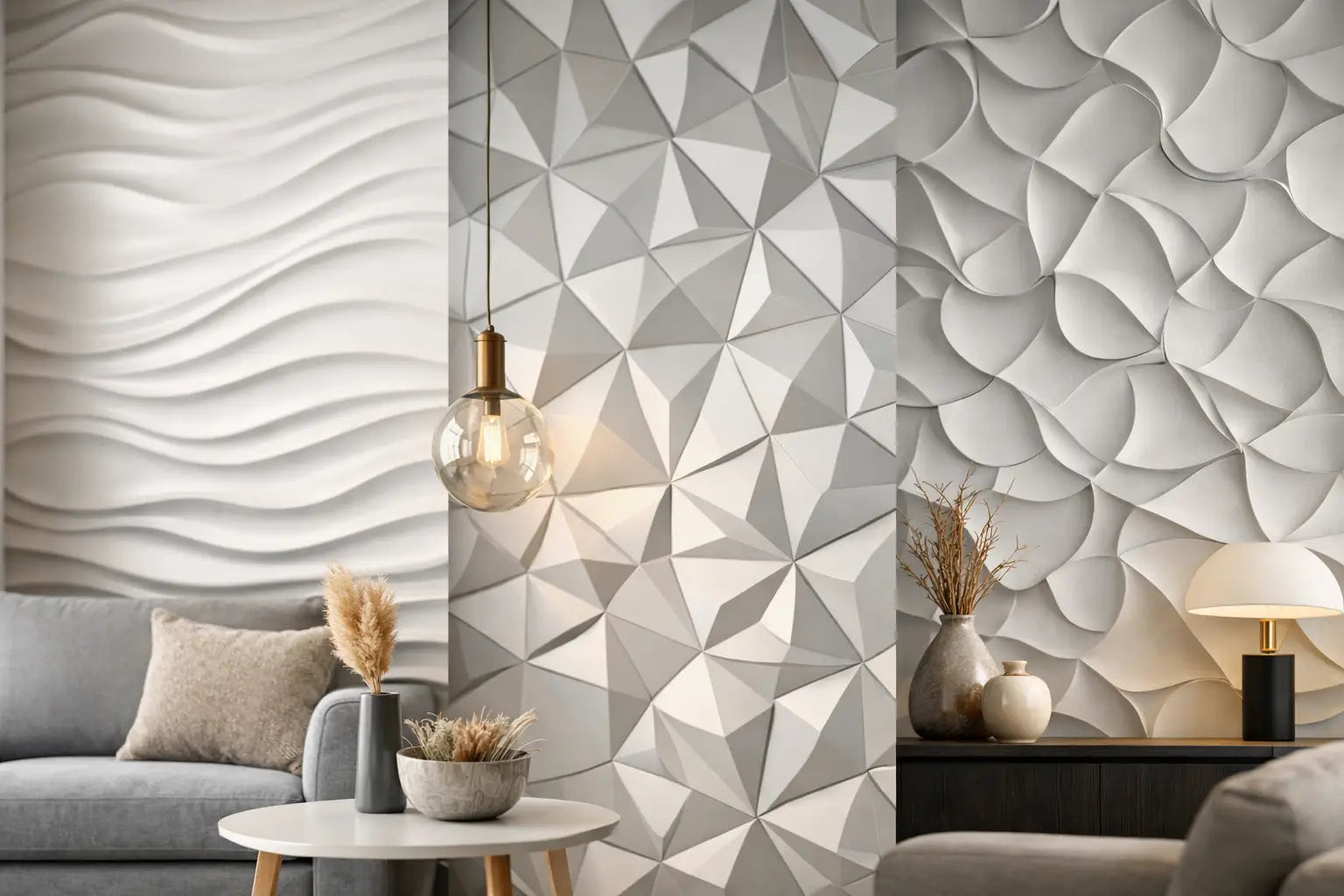
A blank wall rarely changes the atmosphere of a room. A textured wall does. 3D wall panels immediately bring that architectural relief often missing from contemporary interiors. They are not just for decoration - they create rhythm, capture light, enhance comfort, and transform an ordinary space into a more refined visual composition.
In a living room, bedroom, entrance hall, or hospitality project, this type of covering meets the same expectation: to create presence without overwhelming the overall design. This is precisely what explains their success with demanding individuals and interior design professionals alike. When the choice is right, the result seems obvious, almost natural, as if the wall was always meant to be that way.
Why 3D wall panels are so appealing
Their primary asset is visual. Unlike a plain paint or a discreet wallpaper, the 3D wall panel introduces true depth. The wall no longer simply encloses the space; it participates in the ambiance. Depending on the chosen pattern, the effect can be graphic, fluid, sculptural, or more minimalist.
But their appeal isn't limited to aesthetics. High-end plaster panels also offer valuable practical qualities. They help improve the acoustic perception of a room and add a feeling of thermal comfort. These are not technical solutions to be compared to heavy insulation, of course, but in an interior, every material matters. The relief, density, and finish play a real role in daily experience.
There's also the matter of personalization. Paintable surfaces allow the panel to be adapted to a very specific universe. Matte white for a gallery look, mineral beige for a soft atmosphere, deep gray for a more assertive decor, tone-on-tone tint for subtle elegance - the same pattern can completely change character depending on the chosen color.
Which styles of 3D wall panels to choose
It all depends on the desired effect and the room in question. A geometric panel generally offers a more contemporary interpretation. It structures volumes, creates rhythm, and works particularly well in modern living rooms, offices, or reception areas. It's a precise, clean choice, often appreciated in projects seeking a strong architectural identity.
Wave patterns create a more fluid sensation. They soften the space and play with light in a more organic way. In a bedroom or relaxation area, this effect is often more enveloping. The wall becomes alive without becoming visually aggressive.
Panels with integrated LEDs have a more scenographic presence. They are very suitable for headboards, TV walls, hallways, or commercial spaces that want to assert a high-end aesthetic. Here, the relief no longer works alone. Light emphasizes shapes, accentuates shadows, and adds an almost architectural dimension. It's very elegant, but requires a bit more careful implementation.
The right choice therefore depends less on current trends than on the role assigned to the wall. Not all patterns are suitable for all surfaces. A very strong relief in a small room can become overwhelming. Conversely, too discreet a design risks losing its impact on a large wall section.
Where to install 3D wall panels for the right effect
The living room remains the most obvious location. A main wall behind a sofa or around a TV unit allows for the creation of a refined focal point without accumulating decorative objects. This is often where panels best reveal their value: they simplify decoration while enriching the space.
In a bedroom, they naturally find their place as a headboard. The effect is more architectural than a simple accent paint, and more timeless than some overly distinctive decorative solutions. The ambiance achieved is more enveloping, and also more visually quiet.
The entrance is another very interesting location. Even on a limited surface, the relief immediately gives an impression of care and standing. For both an apartment and a house, it's an effective way to establish an identity from the first few steps.
In professional projects, 3D wall panels work very well in reception areas, restaurants, hotels, wellness spaces, or premium offices. They create a memorable decor without resorting to heavy renovations. It's a detail that changes the overall perception of the place.
Plaster, an elegant and durable choice
Not all 3D wall panels are created equal. The material has a direct influence on the finish, durability, and perceived quality. Plaster remains a particularly appreciated option when seeking a premium result.
Its appearance is clean, dense, and authentic. The lines are well-defined, the reliefs more noble, and the surface takes paint very well. Once properly installed and finished, a plaster panel gives a more integrated, almost custom-made impression. This is an important point for those who want to avoid an overly decorative or flimsy result.
It must simply be kept in mind that this visual quality deserves serious installation. Plaster evokes durable elegance rather than a temporary solution. For this reason, it appeals to lovers of beautiful interiors as much as to decorators or specifiers working on projects with high aesthetic demands.
Installation: simple, but not improvised
One of the great advantages of these panels is their relatively accessible installation. On a clean, dry, and well-prepared surface, installation can be quick, especially with suitable accessories. This is a real benefit for individuals motivated by a DIY project.
That said, simplicity does not mean approximation. An uneven wall, poor alignment, or a neglected finish can significantly reduce the final impact. With a textured covering, the eye quickly spots imperfections. The cleaner the design, the more precision matters.
For a small decorative wall, installation by a careful DIYer is entirely feasible. For a large surface, a complex pattern, or a panel with integrated lighting, calling on a professional is often the most reassuring choice. The extra cost is justified by the crispness of the result.
Paint, light, furniture: achieving the overall effect
A textured wall does not need to be overloaded. In fact, it's often the opposite. The more character the panel has, the more coherent the surrounding decor should remain. A calm palette will better highlight the texture than a visually saturated environment.
Light plays a central role. The same panel can appear discreet in diffused light and spectacular under侧lighting. It is therefore necessary to consider the rendering at different times of the day. In some cases, a few well-placed wall lights are enough to reveal all the richness of the relief.
The choice of paint also deserves consideration. Light shades generally subtly emphasize shadows and visually enlarge the space. Dark colors reinforce the wall's presence and create a more theatrical effect. No single choice is universal. In a dimly lit room, a dark shade can be superb, but it will require a more controlled balance with the furniture and lighting.
For which projects are 3D wall panels most relevant?
They are particularly convincing when an interior lacks structure or personality. In a renovation, they allow for visually correcting the banality of a volume without overhauling the entire architecture. In a new home, they add that extra character often missing from perfectly smooth walls.
They are also relevant for spaces that want to appear more upscale with a targeted intervention. A single well-treated wall can be enough to elevate the entire perception of a room. It's an effective decorative lever, provided you don't try to use it everywhere.
For both residential and more professional projects, the challenge is not just to choose a beautiful pattern. It's about choosing the right location, the right scale, and the right finish. This is where the difference lies between a fleeting decorative effect and a wall that gracefully endures over the years.
At EFFET MARBELLA, this approach naturally guides the selection of panels: models designed to create a strong visual impact, while remaining consistent with a refined and durable interior.
A beautiful wall doesn't need to overdo it. With the right 3D wall panels, sometimes just one well-thought-out surface is enough to give the entire room a calmer, more sophisticated, and much more memorable look.


